Families of Beirut strike victims vow to fight for justice / Photo: © AFP

 London
 14 °C
14 °C

 Manchester
 13 °C
13 °C
 Glasgow
 16 °C
16 °C
 Dublin
 12 °C
12 °C
 Belfast
10 °C
Belfast
10 °C
 Washington
18 °C
Washington
18 °C
 Denver
13 °C
Denver
13 °C
 Atlanta
 20 °C
20 °C
 Dallas
27 °C
Dallas
27 °C
 Houston Texas
 27 °C
27 °C
 New Orleans
27 °C
New Orleans
27 °C
 El Paso
18 °C
El Paso
18 °C
 Phoenix
24 °C
Phoenix
24 °C
 Los Angeles
21 °C
San Diego
20 °C
San Francisco
Los Angeles
21 °C
San Diego
20 °C
San Francisco
 13 °C
Chicago
18 °C
Minneapolis
17 °C
Seattle
11 °C
Portland
14 °C
Salt Lake City
15 °C
Las Vegas
24 °C
Miami
13 °C
Chicago
18 °C
Minneapolis
17 °C
Seattle
11 °C
Portland
14 °C
Salt Lake City
15 °C
Las Vegas
24 °C
Miami
 27 °C
Jacksonville
23 °C
San Antonio
28 °C
Bermuda
26 °C
Nassau
18 °C
Iqaluit
4 °C
Yellowknife
4 °C
Anchorage
3 °C
Fairbanks
27 °C
Jacksonville
23 °C
San Antonio
28 °C
Bermuda
26 °C
Nassau
18 °C
Iqaluit
4 °C
Yellowknife
4 °C
Anchorage
3 °C
Fairbanks
 1 °C
Barrow
-5 °C
Calgary
4 °C
Edmonton
21 °C
Winnipeg
8 °C
Goose Bay
17 °C
Halifax
14 °C
Boston
15 °C
Ottawa
17 °C
Toronto
17 °C
Detroit
18 °C
Cleveland
21 °C
New York
19 °C
Baltimore
17 °C
Philadelphia
18 °C
Nuuk (Godthåb)
-1 °C
Hong Kong
34 °C
Singapore
32 °C
Melbourne
26 °C
Canberra
21 °C
Adelaide
1 °C
Barrow
-5 °C
Calgary
4 °C
Edmonton
21 °C
Winnipeg
8 °C
Goose Bay
17 °C
Halifax
14 °C
Boston
15 °C
Ottawa
17 °C
Toronto
17 °C
Detroit
18 °C
Cleveland
21 °C
New York
19 °C
Baltimore
17 °C
Philadelphia
18 °C
Nuuk (Godthåb)
-1 °C
Hong Kong
34 °C
Singapore
32 °C
Melbourne
26 °C
Canberra
21 °C
Adelaide
 18 °C
Darwin
31 °C
Perth
20 °C
Fort Worth
27 °C
Honolulu
25 °C
Sydney
23 °C
Johannesburg
12 °C
Dubai
38 °C
Mumbai
34 °C
Zürich
19 °C
Tokyo
28 °C
Seoul
21 °C
Delhi
34 °C
Beijing
23 °C
Riyadh
37 °C
Prague
15 °C
Pennsylvania
17 °C
Valletta
23 °C
Manama
36 °C
Warsaw
15 °C
Stockholm
15 °C
18 °C
Darwin
31 °C
Perth
20 °C
Fort Worth
27 °C
Honolulu
25 °C
Sydney
23 °C
Johannesburg
12 °C
Dubai
38 °C
Mumbai
34 °C
Zürich
19 °C
Tokyo
28 °C
Seoul
21 °C
Delhi
34 °C
Beijing
23 °C
Riyadh
37 °C
Prague
15 °C
Pennsylvania
17 °C
Valletta
23 °C
Manama
36 °C
Warsaw
15 °C
Stockholm
15 °C
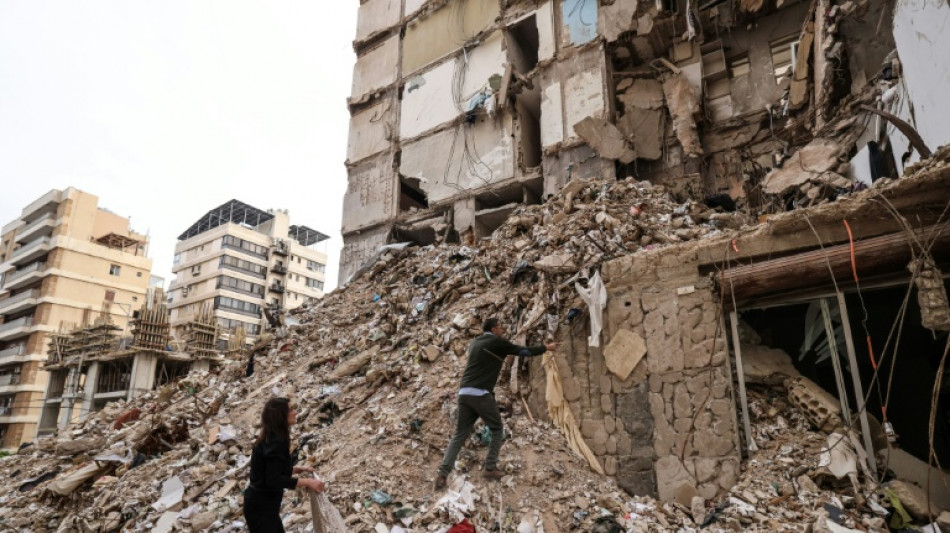
Standing before their devastated building in central Beirut, childhood neighbours Wael Sabbagh and Ghida Krisht vow to fight for justice after an Israeli strike killed their family members.
On April 8, hours after a ceasefire was announced between the United States and Iran, Israel launched a massive wave of airstrikes across Lebanon including the heart of the capital, killing more than 350 people.
Sabbagh's mother and brother, and Krisht's parents and another relative, were killed in a strike on a building in central Beirut's well-off Tallet al-Khayat district, on what Lebanese now refer to as Black Wednesday.
Their parents had lived there for decades and thought they would be safe.
"I lost my mother, my brother, my home, my childhood," said Sabbagh, 52, a businessman who now lives in Mexico.
Through images online, he came to the heart-wrenching realisation that his family's building had been struck.
"Nine people were killed in the building... It gets talked about as if they were just numbers, but they were our loved ones," he said, lighting one cigarette after another.
Sabbagh said he and Krisht are putting together a legal file to demand justice even though "the road will be long".
"There are people that do not have the emotional capacity... the financial ability, people that are not connected in any way to be able to reach any accountability," he said.
"We do have a voice, we are connected, we are emotionally strong, in spite of everything that's happened to us, to demand accountability."
- 'My brother's bracelet' -
In the ruins, Sabbagh picked out bits of his family's shattered life -- a scrap of his mother Afaf's bedspread, chunks of wooden furniture from their dining room, a red sofa cushion.
"This is my brother Hassan's bracelet," he said, showing it on his wrist, his voice trembling.
It took three days to identify the body of his brother, who was wearing the bracelet at the time.
Krisht's mother -- well-known poet Khatoun Salma, 70 -- was killed along with her father Mohammed, 72, and a relative who had fled Israeli bombardment on south Lebanon's Tyre region.
"As soon as I learnt about the strike, I called my father but the line was off. I called my mother, but her phone rang out," said Krisht, 41, who works for a humanitarian organisation and lives in another Beirut district that was also hit that day.
Rescuers did not let her see her parents disfigured faces -- just their hands and feet.
She said she recognised her mother's from her red nail polish.
"We want to gather all the testimonies and evidence we can to document this and have a complete case. We can't be silent about what happened," she said.
"We to want to pursue the path to international justice" and be an example for other victims' families, she added.
Until now, only French-Lebanese artist Ali Cherri has launched legal action in France after parents were killed in a 2024 Israeli strike on their residential building in Beirut.
Lebanon says Israeli attacks since the latest war between Israel and Hezbollah began on March 2 have killed more than 3,000 people.
- 'Did you see the smoke?' -
"There were no weapons in the building. There was no political activity. There was no reason to destroy this building and its inhabitants," Sabbagh said.
Shortly after the Tallet al-Khayat strike, Israel's army said it had "struck a Hezbollah commander in Beirut".
Krisht's parents and their relative were on the sixth floor, while Sabbagh's mother and brother lived on the seventh.
Sabbagh said the owner of the building, who lived on the eighth floor, was also killed, as well as an elderly man, his son and their Ethiopian housekeeper who lived on the third.
The man and his son had the same surname as a Hezbollah official who Israel a day after the strike said it killed in Beirut on April 8, without specifying where.
Israel's army identified the official as Ali Yusuf Harshi, saying he was the "personal secretary and nephew of Hezbollah Secretary-General Naim Qassem".
Hezbollah never confirmed his death.
With part of the nine-story building still standing, Sabbagh was able to use a crane to reach one of his mother's cupboards and retrieve a photo album.
Krisht managed to find a purse with her mother's last hand-written poem inside.
"Did you see the smoke?
Did you smell the fire?
Did you gather up my weakness?
Did you gather up my weariness, or see how pieces of me are scattered?"
S. Sokolow--BTZ