Danish PM's left-wing bloc wins election, but no majority / Photo: © Ritzau Scanpix/AFP

 London
 16 °C
16 °C

 Manchester
 14 °C
14 °C
 Glasgow
 17 °C
17 °C
 Dublin
 14 °C
14 °C
 Belfast
14 °C
Belfast
14 °C
 Washington
 30 °C
30 °C
 Denver
 21 °C
21 °C
 Atlanta
29 °C
Atlanta
29 °C
 Dallas
 22 °C
22 °C
 Houston Texas
31 °C
Houston Texas
31 °C
 New Orleans
31 °C
New Orleans
31 °C
 El Paso
 23 °C
23 °C
 Phoenix
32 °C
Phoenix
32 °C
 Los Angeles
28 °C
San Diego
28 °C
San Francisco
21 °C
Chicago
22 °C
Minneapolis
18 °C
Seattle
18 °C
Portland
22 °C
Salt Lake City
24 °C
Las Vegas
32 °C
Miami
25 °C
Jacksonville
30 °C
San Antonio
23 °C
Bermuda
26 °C
Nassau
23 °C
Iqaluit
5 °C
Yellowknife
7 °C
Anchorage
1 °C
Fairbanks
-1 °C
Barrow
-4 °C
Calgary
13 °C
Edmonton
33 °C
Winnipeg
12 °C
Goose Bay
20 °C
Halifax
23 °C
Boston
23 °C
Ottawa
18 °C
Toronto
22 °C
Detroit
24 °C
Cleveland
29 °C
New York
25 °C
Baltimore
29 °C
Philadelphia
27 °C
Nuuk (Godthåb)
5 °C
Hong Kong
Los Angeles
28 °C
San Diego
28 °C
San Francisco
21 °C
Chicago
22 °C
Minneapolis
18 °C
Seattle
18 °C
Portland
22 °C
Salt Lake City
24 °C
Las Vegas
32 °C
Miami
25 °C
Jacksonville
30 °C
San Antonio
23 °C
Bermuda
26 °C
Nassau
23 °C
Iqaluit
5 °C
Yellowknife
7 °C
Anchorage
1 °C
Fairbanks
-1 °C
Barrow
-4 °C
Calgary
13 °C
Edmonton
33 °C
Winnipeg
12 °C
Goose Bay
20 °C
Halifax
23 °C
Boston
23 °C
Ottawa
18 °C
Toronto
22 °C
Detroit
24 °C
Cleveland
29 °C
New York
25 °C
Baltimore
29 °C
Philadelphia
27 °C
Nuuk (Godthåb)
5 °C
Hong Kong
 29 °C
Singapore
27 °C
Melbourne
27 °C
Canberra
13 °C
Adelaide
14 °C
Darwin
25 °C
Perth
11 °C
Fort Worth
23 °C
Honolulu
25 °C
Sydney
16 °C
Johannesburg
9 °C
Dubai
33 °C
Mumbai
31 °C
Zürich
18 °C
Tokyo
22 °C
Seoul
8 °C
Delhi
26 °C
Beijing
8 °C
Riyadh
32 °C
Prague
18 °C
Pennsylvania
28 °C
Valletta
24 °C
Manama
32 °C
Warsaw
13 °C
Stockholm
14 °C
29 °C
Singapore
27 °C
Melbourne
27 °C
Canberra
13 °C
Adelaide
14 °C
Darwin
25 °C
Perth
11 °C
Fort Worth
23 °C
Honolulu
25 °C
Sydney
16 °C
Johannesburg
9 °C
Dubai
33 °C
Mumbai
31 °C
Zürich
18 °C
Tokyo
22 °C
Seoul
8 °C
Delhi
26 °C
Beijing
8 °C
Riyadh
32 °C
Prague
18 °C
Pennsylvania
28 °C
Valletta
24 °C
Manama
32 °C
Warsaw
13 °C
Stockholm
14 °C
Denmark's Social Democrats, led by Prime Minister Mette Frederiksen, finished first in Tuesday's general election but posted their weakest showing in more than 120 years and the left-wing bloc failed to secure a majority.
With all votes counted in metropolitan Denmark, the left bloc was credited with 84 seats in the 179-seat parliament and the right with 77, while 90 are needed for a majority.
It remains to be seen which bloc will be able to build a majority.
The centrist Moderate party, headed by Foreign Minister Lars Lokke Rasmussen, became kingmaker with 14 seats, and thorny negotiations are expected in the coming weeks to build a coalition government.
Lokke told cheering supporters he wanted to see a cross-bloc coalition similar to Frederiksen's unprecedented left-right government in power since 2022.
"We must not be divided. We must not be red (left-wing). We must not be blue (right-wing). We have to work together," he said.
However, his coalition partner, Liberal Party leader Troels Lund Poulsen, ruled out forming a government with the Social Democrats.
"Either we have a centre-right government, or we go in opposition," he told supporters.
- Far-right rise -
Frederiksen, seen as the favourite going into the elections, has been praised for her leadership after fending off US President Donald Trump's repeated demands to annex Greenland, a Danish autonomous territory he claims the United States needs for national security reasons.
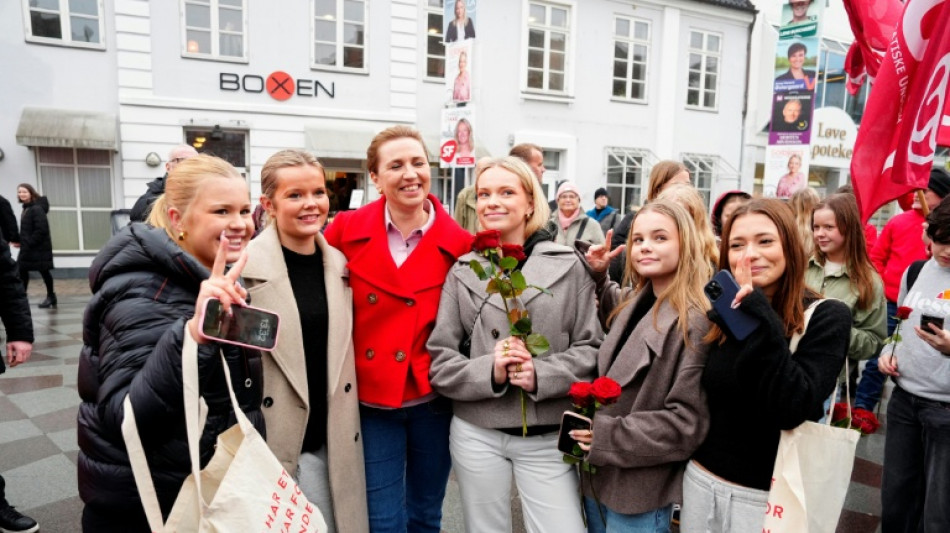
The prime minister, who has been in office since 2019, spent part of election day in Aalborg, her electoral stronghold in the country's northwest, with Greenlanders living in Denmark.
Traditionally Denmark's biggest party, the Social Democrats were credited with just 21.8 percent of votes, their lowest score since 1903 and down from 27.5 percent in 2022.
All three parties in Frederiksen's unprecedented left-right government lost support.
Green Left leader Pia Olsen Dyhr said meanwhile that her party's "historic" strong score -- making it now the second-biggest party on the left -- showed Danes had given them a mandate and she was "ready to negotiate".
"We must prioritise welfare, we must prioritise the green transition. And if we can't do that, then we will not enter government. Then we will be in opposition."
The anti-immigration Danish People's Party, which has heavily influenced policy since the late 1990s but slumped in the 2022 election, more than tripled its result to 9.1 percent of votes.
"A tripling of votes is a remarkable expression of the Danish people in support of my party," party leader Morten Messerschmidt told AFP.
"We are all awaiting now what's going to happen in France, we are awaiting what's happening in Hungary, in the Netherlands and not least of course the United Kingdom with Nigel Farage."
- 'Serious situation' -
Four seats in Denmark's parliament are held by its two autonomous territories -- two for Greenland, where votes have not yet been counted, and two for the Faroe Islands, where one went to each bloc.
The election campaign has generated more interest than usual in Greenland, where 27 candidates vied for the two seats.
"I think it's the most important election for the Danish parliament in Greenland in history," Greenlandic Prime Minister Jens-Frederik Nielsen told AFP in Nuuk.
"We are in a time where we have a superpower trying to acquire us, take us, control us," he added, stressing that the territory still found itself in a "serious situation".
"I think the most important thing that all the parties in Greenland have agreed on is that we need to work together, whoever gets elected for the parliament," he said.
But Greenlandic voter Lars did not share the view that Greenland's parties stood united, saying he kept seeing divisions play out on social media.
"Everybody is fighting. Greenlanders are fighting. It's terrible," the lawyer told AFP.
Greenland's main political parties all want independence from Denmark, but differ on the pace of the separation.
In Denmark, the row over the vast Arctic island has not been central in the campaign.
It instead focused on domestic issues, including inflation, the welfare state, high nitrate levels in water from agriculture, and immigration.
She has defended as "fair" a proposal to deny non-essential health care to people of foreign origin who threaten medical personnel.
O. Karlsson--BTZ