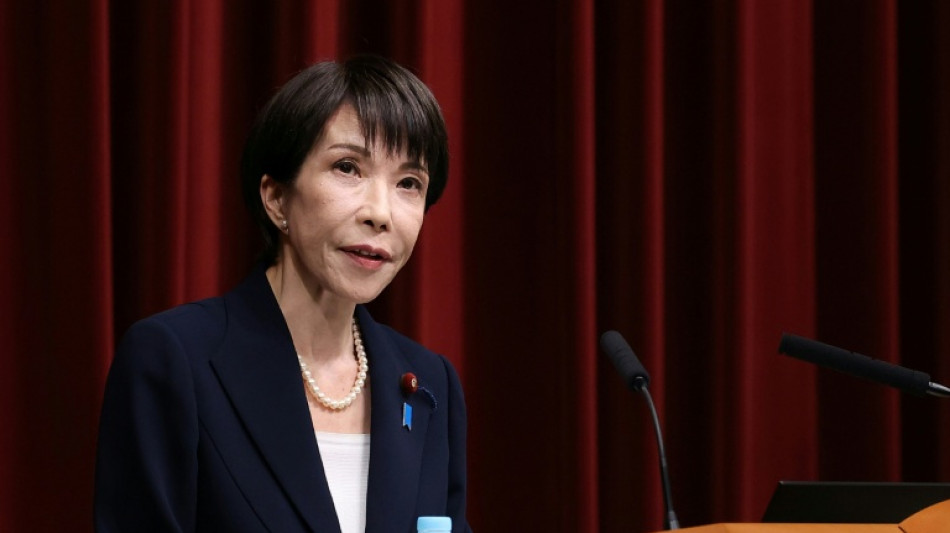
Japan PM Takaichi set to dissolve parliament for snap election / Photo: © POOL/AFP

 London
 21 °C
21 °C

 Manchester
 18 °C
18 °C
 Glasgow
 19 °C
19 °C
 Dublin
17 °C
Dublin
17 °C
 Belfast
 16 °C
16 °C
 Washington
22 °C
Washington
22 °C
 Denver
 11 °C
11 °C
 Atlanta
22 °C
Atlanta
22 °C
 Dallas
22 °C
Dallas
22 °C
 Houston Texas
25 °C
Houston Texas
25 °C
 New Orleans
28 °C
New Orleans
28 °C
 El Paso
17 °C
El Paso
17 °C
 Phoenix
26 °C
Phoenix
26 °C
 Los Angeles
 20 °C
San Diego
20 °C
San Diego
 20 °C
San Francisco
14 °C
Chicago
15 °C
Minneapolis
8 °C
Seattle
13 °C
Portland
12 °C
Salt Lake City
15 °C
Las Vegas
22 °C
Miami
29 °C
Jacksonville
28 °C
San Antonio
24 °C
Bermuda
27 °C
Nassau
22 °C
Iqaluit
4 °C
Yellowknife
4 °C
Anchorage
20 °C
San Francisco
14 °C
Chicago
15 °C
Minneapolis
8 °C
Seattle
13 °C
Portland
12 °C
Salt Lake City
15 °C
Las Vegas
22 °C
Miami
29 °C
Jacksonville
28 °C
San Antonio
24 °C
Bermuda
27 °C
Nassau
22 °C
Iqaluit
4 °C
Yellowknife
4 °C
Anchorage
 1 °C
Fairbanks
-1 °C
Barrow
-8 °C
Calgary
6 °C
Edmonton
23 °C
Winnipeg
4 °C
Goose Bay
17 °C
Halifax
22 °C
Boston
23 °C
Ottawa
15 °C
Toronto
12 °C
Detroit
13 °C
Cleveland
14 °C
New York
22 °C
Baltimore
22 °C
Philadelphia
22 °C
Nuuk (Godthåb)
4 °C
Hong Kong
1 °C
Fairbanks
-1 °C
Barrow
-8 °C
Calgary
6 °C
Edmonton
23 °C
Winnipeg
4 °C
Goose Bay
17 °C
Halifax
22 °C
Boston
23 °C
Ottawa
15 °C
Toronto
12 °C
Detroit
13 °C
Cleveland
14 °C
New York
22 °C
Baltimore
22 °C
Philadelphia
22 °C
Nuuk (Godthåb)
4 °C
Hong Kong
 30 °C
Singapore
29 °C
Melbourne
28 °C
Canberra
13 °C
Adelaide
12 °C
Darwin
28 °C
Perth
16 °C
Fort Worth
23 °C
Honolulu
25 °C
Sydney
18 °C
Johannesburg
20 °C
Dubai
36 °C
Mumbai
34 °C
Zürich
21 °C
Tokyo
20 °C
Seoul
14 °C
Delhi
31 °C
Beijing
16 °C
Riyadh
39 °C
Prague
19 °C
Pennsylvania
21 °C
Valletta
26 °C
Manama
35 °C
Warsaw
21 °C
Stockholm
17 °C
30 °C
Singapore
29 °C
Melbourne
28 °C
Canberra
13 °C
Adelaide
12 °C
Darwin
28 °C
Perth
16 °C
Fort Worth
23 °C
Honolulu
25 °C
Sydney
18 °C
Johannesburg
20 °C
Dubai
36 °C
Mumbai
34 °C
Zürich
21 °C
Tokyo
20 °C
Seoul
14 °C
Delhi
31 °C
Beijing
16 °C
Riyadh
39 °C
Prague
19 °C
Pennsylvania
21 °C
Valletta
26 °C
Manama
35 °C
Warsaw
21 °C
Stockholm
17 °C
Japanese Prime Minister Sanae Takaichi will dissolve parliament on Friday ahead of a snap election on February 8, counting on her cabinet's high poll numbers to steer her otherwise unpopular ruling party to victory.
The country's first woman leader announced on Monday that she planned to dissolve the lower house, seeking public backing for measures to shield households from rising living costs and increased spending on defence.
The ruling coalition of Takaichi's Liberal Democratic Party (LDP) and the Japan Innovation Party (JIP) has only a slim majority in the powerful lower chamber.
Takaichi is hoping widespread support for her cabinet will help deliver her a stronger mandate even though the LDP itself is battling a low approval rating and a string of recent scandals.
"It's not clear if high public support for the Takaichi cabinet will actually lead to support of the LDP," Hidehiro Yamamoto, politics professor at the University of Tsukuba, told AFP.
"What the public are concerned about is measures to address inflation," he said.
Ahead of the dissolution, December inflation figures -- due to be released Friday -- will be closely watched.
Public discontent over rising prices largely contributed to the downfall of Shigeru Ishiba, whom Takaichi succeeded in October.
While Japan was long haunted by deflation, it has more recently faced a surge in living costs and a chronically weak yen that has made imports more expensive.
Rice has become a symbol: its price more than doubled in mid-2025 compared to a year earlier, before easing in recent months.
Vowing to address the issue and shore up the world's fourth-largest economy, Takaichi's cabinet approved a record 122.3-trillion-yen ($770 billion) budget for the fiscal year from April 2026.
But rivals say dissolving the lower house risks delaying its passage through parliament, with Jun Azumi of the main opposition Constitutional Democratic Party (CDP) saying it would "sacrifice livelihoods".
- Tax relief -
If elected, Takaichi has pledged to cut a sales tax on food for a two-year period to "alleviate the burden" on people struggling with inflation.
Opposition parties are also calling for the tax relief.
But Takaichi's "proactive" fiscal spending risks inflating the country's already colossal debt, which is expected to exceed 230 percent of GDP in the fiscal year 2025-26. Takaichi says the policy is "responsible".
The prospect of tax cuts roiled the bond market this week, already rattled by the massive stimulus plan and worried about fiscal slippage financed by debt.
Yields on Japanese government bonds have soared, signalling investor distrust.
The Bank of Japan, which is responsible for price stability, is due to announce a monetary policy decision on Friday after a two-day meeting. It has raised its key interest rates several times since early 2024 to rein in inflation.
The central bank is expected to hold rates steady, but its statements on market disruptions will also be closely watched.
- Centrist alliance -
The LDP has governed Japan almost uninterrupted for decades, albeit with frequent leader changes.
The CDP has joined forces with another party, Komeito, hoping their new Centrist Reform Alliance can draw swing voters away from Takaichi.
Analysts say the election could be a close battle depending on the success of the alliance, but the opposition's chances of winning remain slim.
"The key could be the voting behaviour of young and middle-aged groups, as was the case in the upper house election" in July, Mizuho Research & Technologies said in a note.
The Takaichi government enjoys around 90 percent support among those under 30, according to a poll published at the end of December by the conservative Sankei Shimbun newspaper and Fuji Television.
O. Joergensen--BTZ