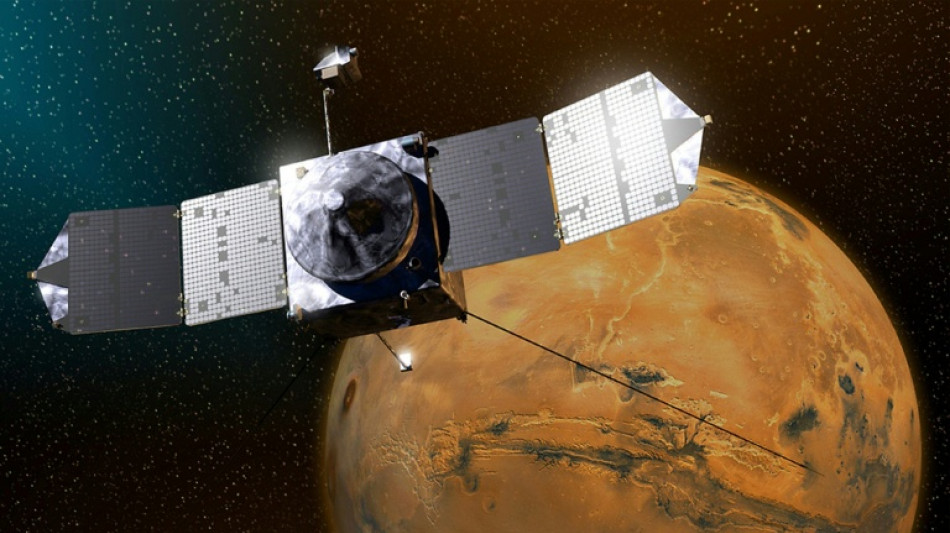
NASA ends mission after loss of Mars probe / Photo: © NASA/LOCKHEED MARTIN/AFP/File

 London
 16 °C
16 °C

 Manchester
 13 °C
13 °C
 Glasgow
13 °C
Glasgow
13 °C
 Dublin
 16 °C
16 °C
 Belfast
 15 °C
15 °C
 Washington
 17 °C
17 °C
 Denver
 28 °C
28 °C
 Atlanta
 27 °C
27 °C
 Dallas
34 °C
Dallas
34 °C
 Houston Texas
32 °C
Houston Texas
32 °C
 New Orleans
30 °C
New Orleans
30 °C
 El Paso
29 °C
El Paso
29 °C
 Phoenix
35 °C
Phoenix
35 °C
 Los Angeles
30 °C
San Diego
Los Angeles
30 °C
San Diego
 29 °C
San Francisco
19 °C
Chicago
19 °C
Minneapolis
15 °C
Seattle
15 °C
Portland
17 °C
Salt Lake City
26 °C
Las Vegas
34 °C
Miami
31 °C
Jacksonville
27 °C
San Antonio
34 °C
Bermuda
26 °C
Nassau
16 °C
Iqaluit
4 °C
Yellowknife
7 °C
Anchorage
9 °C
Fairbanks
9 °C
Barrow
0 °C
Calgary
9 °C
Edmonton
26 °C
Winnipeg
16 °C
Goose Bay
21 °C
Halifax
13 °C
Boston
13 °C
Ottawa
24 °C
Toronto
23 °C
Detroit
22 °C
Cleveland
20 °C
New York
16 °C
Baltimore
15 °C
Philadelphia
15 °C
Nuuk (Godthåb)
3 °C
Hong Kong
27 °C
Singapore
29 °C
San Francisco
19 °C
Chicago
19 °C
Minneapolis
15 °C
Seattle
15 °C
Portland
17 °C
Salt Lake City
26 °C
Las Vegas
34 °C
Miami
31 °C
Jacksonville
27 °C
San Antonio
34 °C
Bermuda
26 °C
Nassau
16 °C
Iqaluit
4 °C
Yellowknife
7 °C
Anchorage
9 °C
Fairbanks
9 °C
Barrow
0 °C
Calgary
9 °C
Edmonton
26 °C
Winnipeg
16 °C
Goose Bay
21 °C
Halifax
13 °C
Boston
13 °C
Ottawa
24 °C
Toronto
23 °C
Detroit
22 °C
Cleveland
20 °C
New York
16 °C
Baltimore
15 °C
Philadelphia
15 °C
Nuuk (Godthåb)
3 °C
Hong Kong
27 °C
Singapore
 28 °C
Melbourne
28 °C
Canberra
10 °C
Adelaide
12 °C
Darwin
25 °C
Perth
14 °C
Fort Worth
34 °C
Honolulu
27 °C
Sydney
15 °C
Johannesburg
20 °C
Dubai
33 °C
Mumbai
28 °C
Zürich
16 °C
Tokyo
18 °C
Seoul
17 °C
Delhi
22 °C
Beijing
18 °C
Riyadh
33 °C
Prague
15 °C
Pennsylvania
14 °C
Valletta
23 °C
Manama
35 °C
Warsaw
12 °C
Stockholm
12 °C
28 °C
Melbourne
28 °C
Canberra
10 °C
Adelaide
12 °C
Darwin
25 °C
Perth
14 °C
Fort Worth
34 °C
Honolulu
27 °C
Sydney
15 °C
Johannesburg
20 °C
Dubai
33 °C
Mumbai
28 °C
Zürich
16 °C
Tokyo
18 °C
Seoul
17 °C
Delhi
22 °C
Beijing
18 °C
Riyadh
33 °C
Prague
15 °C
Pennsylvania
14 °C
Valletta
23 °C
Manama
35 °C
Warsaw
12 °C
Stockholm
12 °C
NASA said Wednesday it will end its mission to study the atmosphere and evolution of Mars after its probe went silent for six months.
Scientific spacecraft MAVEN -- short for Mars Atmosphere and Volatile Evolution -- went into Martian orbit in 2014.
The mission was originally intended to operate for one or two years, but the probe remained active for more than a decade, until December 2025 when it lost contact with Earth.
After months of silence, NASA has resigned itself to the loss of the spacecraft, which is believed to still be in orbit around Mars.
The US space agency said Wednesday it would investigate the cause of the loss.
For Shannon Curry, an astrophysics professor involved in the flight, it was the "best Mars mission ever."
The probe enabled scientists to understand the phenomenon of atmospheric escape, which is the loss of atmospheric gases into space, Curry told reporters.
"We now have a better understanding of atmospheric escape at Mars than at any other planet, including Earth, and consequently Mars serves as an incredible natural laboratory for understanding rocky planet atmosphere," Curry said.
NASA exploration program chief Tiffany Morgan added that the MAVEN "profoundly advanced our understanding of Mars's atmosphere, climate history, and habitability."
The probe also served as a communications relay between Earth and the robots NASA has sent to the surface of the red planet.
Other orbiters will now have to pick up those relays.
D. Meier--BTZ