Memorial Set for Minnette Lehmann, Bay Area Art Stalwart and Photographer

 London
 9 °C

 Manchester
 6 °C
 Glasgow
2 °C
 Dublin
9 °C
 Belfast
8 °C
 Washington
 20 °C
 Denver
14 °C
 Atlanta
 18 °C
 Dallas
24 °C
 Houston Texas
21 °C
 New Orleans
 22 °C
 El Paso
16 °C
 Phoenix
23 °C
 Los Angeles
24 °C
San Diego
25 °C
San Francisco
15 °C
Chicago
14 °C
Minneapolis
11 °C
Seattle
13 °C
Portland
13 °C
Salt Lake City
12 °C
Las Vegas
19 °C
Miami
29 °C
Jacksonville
25 °C
San Antonio
20 °C
Bermuda
24 °C
Nassau
16 °C
Iqaluit
 -1 °C
Yellowknife
0 °C
Anchorage
0 °C
Fairbanks
 -11 °C
Barrow
-10 °C
Calgary
8 °C
Edmonton
19 °C
Winnipeg
2 °C
Goose Bay
8 °C
Halifax
13 °C
Boston
13 °C
Ottawa
6 °C
Toronto
11 °C
Detroit
11 °C
Cleveland
14 °C
New York
17 °C
Baltimore
18 °C
Philadelphia
18 °C
Nuuk (Godthåb)
 3 °C
Hong Kong
22 °C
Singapore
26 °C
Melbourne
29 °C
Canberra
10 °C
Adelaide
 12 °C
Darwin
28 °C
Perth
18 °C
Fort Worth
24 °C
Honolulu
24 °C
Sydney
19 °C
Johannesburg
27 °C
Dubai
30 °C
Mumbai
 30 °C
Zürich
 13 °C
Tokyo
11 °C
Seoul
4 °C
Delhi
20 °C
Beijing
1 °C
Riyadh
15 °C
Prague
4 °C
Pennsylvania
18 °C
Valletta
22 °C
Manama
22 °C
Warsaw
2 °C
Stockholm
5 °C
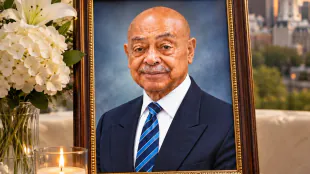
San Francisco is preparing to honor Minnette Lehmann, a pioneering photographer, feminist artist, and cultural critic who died in June just shy of her 98th birthday. A memorial celebration honoring her seven-decade impact on the Bay Area’s art world will take place on Sunday at The Lab.
A memorial and celebration of the life of Minnette Lehmann, a foundational figure in San Francisco’s post-war art scene, is scheduled for Sunday at The Lab. The event marks the passing of Lehmann, who died in June just weeks before her 98th birthday, concluding a 70-year career defined by radicalism, feminist critique, and an unyielding engagement with the city’s cultural evolution.
Lehmann was born on August 19, 1928, to Barney and Bella Berns, Jewish refugees from Poland who operated a men’s clothing store in downtown Sacramento. Her early connection to San Francisco began with a ferry trip across the bay before its bridges were constructed, followed by visits to her father at the Golden Gate International Exposition on Treasure Island. She recalled childhood trips to Calistoga, describing the town as a community composed of "Jews, anarchists, and communists," a demographic mix that would foreshadow her own political trajectory.
Lehmann left Sacramento for the University of California, Berkeley, at age 16, enrolling in the fall of 1945 when male students were still serving in World War II. There, she studied sociology and pedagogy while taking music classes with exiled composer Arnold Schoenberg. Her time at Berkeley was marked by intense political activism; alongside her first husband, socialist student leader Bob Martinson, she helped organize the largest campus demonstrations ever held against the University of California Board of Regents’ requirement that employees sign an anti-communist loyalty oath. These protests served as a precursor to the later Free Speech Movement.
During this period, Lehmann immersed herself in Berkeley’s café culture, discussing literature by Kafka and D.H. Lawrence at Larry Blake’s while Telegraph Avenue was lined with bookstores. She worked at a record store on Telegraph Avenue, where she befriended author Philip K. Dick, who reportedly challenged her worldview by declaring that the United States did not win World War II. In 1953, she assisted experimental filmmaker Jordan Belson in painting floor-to-ceiling murals for the original City Lights Pocket Book Shop.
After graduating from Berkeley and divorcing Martinson, Lehmann spent a year traveling alone in Europe. Upon returning to San Francisco, she married Herbert Lehmann, a German-Jewish psychoanalyst who had fled the Nazis and served as a British intelligence officer. The couple lived in the Western Addition, Russian Hill, and Jordan Park neighborhoods before settling in an Arts and Crafts house in Cow Hollow, where they raised three children: Barbara, who became an artist; Michael, the Hollywood director of "Heathers"; and Stephanie, a novelist.
Lehmann’s entry into photography was pragmatic rather than planned. In 1968, during the San Francisco State University student strike, she borrowed her son’s camera to document police brutality, handing out wet handkerchiefs to protestors exposed to tear gas. This experience led her back to school in her forties to study photography at the San Francisco Art Institute (SFAI). There, she formed lasting friendships with artists such as Harry Bowers, Steve Collins, Mitchell Payne, Henry Wessel, Linda Montano, and Judy Dater.
Her professional work began to gain recognition in the 1970s. In 1975, Lehmann received a National Endowment for the Arts grant for "Trouble in Paradise," a portrait series of married couples that critically examined the institution of marriage at a time when it faced significant public scrutiny. Her work was among the first visual art bodies to "problematize" the concept of marriage.
In the late 1970s and early 1980s, Lehmann became deeply involved in the Women’s Movement. Between 1976 and 1980, she exhibited "The Nakeds," a series of nude portraits of men and women, and hosted women’s consciousness groups in her home and North Beach restaurants. In 1987, alongside student-artist Lutz Bacher, she contributed to the creation of "Theory and Flesh" at San Francisco State University, a publication described by Art Forum as combining critical theories with aggressive vernacular imagery.
Lehmann maintained a rigorous intellectual presence throughout her life. She once traveled to the United Kingdom to present a paper on Roland Barthes and photography at an aesthetics conference, adopting the persona of an academic. Her work allowed her to process personal hardships, including sexual violence and the death of her daughter Barbara from Hodgkin’s lymphoma at age 37, with what colleagues described as equanimity and analysis.
Following Barbara’s death, Lehmann shifted away from photography toward other mediums, though she continued to create. At age 97, she held her first exhibition of paintings at Adobe Books & Arts Cooperative. She remained a mentor to emerging artists, including Laura Brun, who co-founded The Lab, and maintained daily connections with friends such as Linda Montano.
Lehmann was known for her sharp political critique, frequently warning against the rise of fascism and the quiet disappearance of civic engagement. She viewed the closure of historic institutions like SFAI and California College of the Arts through this lens, seeing them as symptoms of a narrowing cultural landscape. Despite these concerns, she remained engaged with younger generations of photographers and writers, treating them with respect and seriousness.
The memorial celebration for Minnette Lehmann will take place on Sunday from noon to 3 p.m. at The Lab in San Francisco. The event is open to the public, inviting those who knew her and those interested in her legacy to gather and reflect on her contributions to art, feminism, and social critique.
Lehmann’s life spanned major shifts in American culture, from the post-war era to the digital age. She was a witness to and participant in the transformation of San Francisco from a bohemian enclave into a global tech hub, maintaining her radical edge throughout. Her memoir, which she worked on with a collaborator for three years prior to her death, remains unfinished, leaving her final thoughts on her long life to be interpreted through her extensive body of work and the memories of those who knew her.
The celebration at The Lab serves as a formal acknowledgment of Lehmann’s status as an emblem of San Francisco’s best cultural traditions. It offers an opportunity for the community to recognize the loss of a figure who challenged conventions, supported emerging artists, and refused to conform to societal expectations regarding age, gender, or political silence.
P. Hansen--BTZ