Winners of this Year's Semmelweis-Richter International Journalism Award Announced

 London
 22 °C
22 °C
 Manchester
 19 °C
19 °C
 Glasgow
14 °C
Glasgow
14 °C
 Dublin
 22 °C
22 °C
 Belfast
23 °C
Belfast
23 °C
 Washington
22 °C
Washington
22 °C
 Denver
 20 °C
20 °C
 Atlanta
32 °C
Atlanta
32 °C
 Dallas
34 °C
Dallas
34 °C
 Houston Texas
33 °C
Houston Texas
33 °C
 New Orleans
32 °C
New Orleans
32 °C
 El Paso
28 °C
El Paso
28 °C
 Phoenix
34 °C
Phoenix
34 °C
 Los Angeles
23 °C
San Diego
23 °C
San Francisco
15 °C
Chicago
18 °C
Minneapolis
13 °C
Seattle
15 °C
Portland
15 °C
Salt Lake City
22 °C
Las Vegas
30 °C
Miami
Los Angeles
23 °C
San Diego
23 °C
San Francisco
15 °C
Chicago
18 °C
Minneapolis
13 °C
Seattle
15 °C
Portland
15 °C
Salt Lake City
22 °C
Las Vegas
30 °C
Miami
 29 °C
Jacksonville
30 °C
San Antonio
33 °C
Bermuda
31 °C
Nassau
20 °C
Iqaluit
4 °C
Yellowknife
13 °C
Anchorage
9 °C
Fairbanks
7 °C
Barrow
29 °C
Jacksonville
30 °C
San Antonio
33 °C
Bermuda
31 °C
Nassau
20 °C
Iqaluit
4 °C
Yellowknife
13 °C
Anchorage
9 °C
Fairbanks
7 °C
Barrow
 -2 °C
Calgary
22 °C
Edmonton
31 °C
Winnipeg
17 °C
Goose Bay
13 °C
Halifax
17 °C
Boston
19 °C
Ottawa
14 °C
Toronto
15 °C
Detroit
16 °C
Cleveland
18 °C
New York
22 °C
Baltimore
22 °C
Philadelphia
22 °C
Nuuk (Godthåb)
5 °C
Hong Kong
-2 °C
Calgary
22 °C
Edmonton
31 °C
Winnipeg
17 °C
Goose Bay
13 °C
Halifax
17 °C
Boston
19 °C
Ottawa
14 °C
Toronto
15 °C
Detroit
16 °C
Cleveland
18 °C
New York
22 °C
Baltimore
22 °C
Philadelphia
22 °C
Nuuk (Godthåb)
5 °C
Hong Kong
 28 °C
Singapore
28 °C
Melbourne
28 °C
Canberra
8 °C
Adelaide
28 °C
Singapore
28 °C
Melbourne
28 °C
Canberra
8 °C
Adelaide
 9 °C
Darwin
24 °C
Perth
13 °C
Fort Worth
33 °C
Honolulu
26 °C
Sydney
15 °C
Johannesburg
19 °C
Dubai
35 °C
Mumbai
26 °C
Zürich
18 °C
Tokyo
24 °C
Seoul
9 °C
Darwin
24 °C
Perth
13 °C
Fort Worth
33 °C
Honolulu
26 °C
Sydney
15 °C
Johannesburg
19 °C
Dubai
35 °C
Mumbai
26 °C
Zürich
18 °C
Tokyo
24 °C
Seoul
 17 °C
Delhi
28 °C
Beijing
18 °C
Riyadh
35 °C
Prague
14 °C
Pennsylvania
20 °C
Valletta
26 °C
Manama
33 °C
Warsaw
12 °C
Stockholm
14 °C
17 °C
Delhi
28 °C
Beijing
18 °C
Riyadh
35 °C
Prague
14 °C
Pennsylvania
20 °C
Valletta
26 °C
Manama
33 °C
Warsaw
12 °C
Stockholm
14 °C
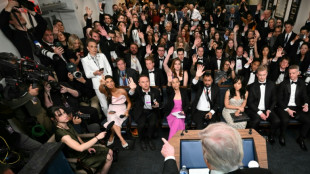
BUDAPEST I. KERÜLET, HU / ACCESS Newswire / September 21, 2026 / For the second time, Semmelweis University, with the support of Gedeon Richter, has recognized outstanding health and science journalism from across Europe through the Semmelweis-Richter Journalism Award. Six entries received awards in the "Women's Health" and "Pharmaceutical Strategies and Innovation" categories. The first prizes in the two categories were awarded to an international investigative project on abortion and an article about a technology that uses miniature bioengineered devices to mimic the functions of human organs. The competition received around 60 entries from nearly 20 countries.
The Semmelweis-Richter Journalism Award was established to recognize high-quality health and science journalism in Europe. As last year, the competition attracted entries from journalists working for major international media outlets, including The Guardian, the Financial Times, The Times, BBC News, Süddeutsche Zeitung and Público. The award-winning articles covered topics ranging from the impact of climate change on pregnancy and the use of artificial intelligence in healthcare to the potential risks of artificially created organisms.
First prize in the "Women's Health" category went to Exporting Abortion, an international investigative journalism project. The project, involving more than a dozen European journalists, was coordinated by Sergio Sangiao, Emilia G. Morales, and Nacho Calle from the Spanish newspaper Público. It examined the barriers faced by women across Europe who cannot access abortion, or have only limited access to it, in their own countries and therefore have to travel abroad for the procedure.
Sarah Neville of the Financial Times took second place with an article looking at how climate change and increasingly frequent extreme heat are raising the risks associated with pregnancy and the potential dangers for both mothers and their unborn children.
Third prize was awarded to Lauren Shirreff of The Telegraph, who told the story of a young woman to highlight the serious consequences of an incorrect psychiatric diagnosis and the stigma faced by patients diagnosed with borderline personality disorder.
In the "Pharmaceutical Strategies and Innovation" category, Vito Tartamella of the Italian magazine Focus took first place. His article looked at organ-on-a-chip technology, which uses human cells to model the functions of individual organs and could offer new possibilities for drug development, reduce the need for animal testing and support the testing of personalized therapies.
Kaya Burgess of The Times received second prize for an article examining "mirror bacteria" that could potentially be artificially created as mirror images of naturally occurring bacteria and the risks they could pose.
Third place went to Filipa Mendes of the Portuguese newspaper Público, who wrote about an artificial intelligence model that analyzes health data to assess the likelihood of developing any of more than 1,000 diseases, in some cases decades in advance.
The entries were evaluated by an international jury. Its members were Dr Béla Merkely, Rector of Semmelweis University; Gábor Orbán, CEO of Gedeon Richter; Dr Nándor Ács, Director of the Department of Obstetrics and Gynecology at Semmelweis University; Professor E. Szilveszter Vizi, medical doctor, academician, former President of the Hungarian Academy of Sciences; Professor Rossella E. Nappi, obstetrician-gynecologist; and Tom Whipple, journalist at The Times and one of last year's winners of the competition.
The two categories have a combined prize fund of EUR 45,000. First-place winners receive EUR 10,000, second-place winners EUR 7,500 and third-place winners EUR 5,000.
The winners will be honored at the Semmelweis-Richter Journalism Award ceremony in Budapest on November 26.
To explore the list of winners and their articles, visit the official website: Winners - Semmelweis Richter Award
About Richter
Richter aspires to be a global innovator in some key scientific fields, while dedicated to making medicines more accessible worldwide. Founded in 1901, headquartered in Hungary, with a market capitalization of EUR 4.8bn and sales of EUR 2.3bn in 2025, it operates Central Europe's largest R&D hub. Its research drives breakthroughs in Neuropsychiatry and Women's Healthcare, while Biotechnology and General Medicines strengthen its affordable treatment portfolio. Committed to sustainable growth, Richter invests in R&D, manufacturing excellence, and digitalization to advance medical innovation. Learn more at www.gedeonrichter.com
About Semmelweis University
Semmelweis University is a leading institution of higher education in Hungary and the Central European region within the area of medicine and health sciences. Its main commitment is the integrity of education, research and healing, which makes the more than 250-year-old Semmelweis University an internationally recognized center of knowledge. As a specialist university, it holds a unique place within the country. Maintaining its position from last year, Semmelweis University ranks 272nd in the 2026 Times Higher Education (THE) World University Rankings, securing the top spot among universities in Hungary and the wider Central and Eastern European region. Learn more at Semmelweis University | Medicine and Health Sciences
For further information:
Richter
Media: Zsuzsa Beke +36 20 916 4507
Semmelweis University
Media: Dóra Szepesi +36 30 016 4502
SOURCE: Gedeon Richter Plc.
View the original press release on ACCESS Newswire
D. O'Sullivan--BTZ