Los Angeles County Rapper Among Three Charged in $8.1 Million Stolen-Check Case

 London
 10 °C
10 °C

 Manchester
 8 °C
8 °C
 Glasgow
7 °C
Glasgow
7 °C
 Dublin
 6 °C
6 °C
 Belfast
 4 °C
4 °C
 Washington
 9 °C
9 °C
 Denver
17 °C
Denver
17 °C
 Atlanta
12 °C
Atlanta
12 °C
 Dallas
17 °C
Dallas
17 °C
 Houston Texas
19 °C
Houston Texas
19 °C
 New Orleans
18 °C
New Orleans
18 °C
 El Paso
22 °C
El Paso
22 °C
 Phoenix
25 °C
Phoenix
25 °C
 Los Angeles
18 °C
San Diego
20 °C
San Francisco
Los Angeles
18 °C
San Diego
20 °C
San Francisco
 15 °C
Chicago
13 °C
Minneapolis
15 °C
Chicago
13 °C
Minneapolis
 12 °C
Seattle
9 °C
Portland
12 °C
Salt Lake City
14 °C
Las Vegas
23 °C
Miami
23 °C
Jacksonville
14 °C
San Antonio
17 °C
Bermuda
25 °C
Nassau
10 °C
Iqaluit
-9 °C
Yellowknife
0 °C
Anchorage
0 °C
Fairbanks
-5 °C
Barrow
-7 °C
Calgary
7 °C
Edmonton
7 °C
Winnipeg
12 °C
Seattle
9 °C
Portland
12 °C
Salt Lake City
14 °C
Las Vegas
23 °C
Miami
23 °C
Jacksonville
14 °C
San Antonio
17 °C
Bermuda
25 °C
Nassau
10 °C
Iqaluit
-9 °C
Yellowknife
0 °C
Anchorage
0 °C
Fairbanks
-5 °C
Barrow
-7 °C
Calgary
7 °C
Edmonton
7 °C
Winnipeg
 5 °C
Goose Bay
8 °C
Halifax
10 °C
Boston
8 °C
Ottawa
3 °C
Toronto
8 °C
Detroit
7 °C
Cleveland
6 °C
New York
11 °C
Baltimore
9 °C
Philadelphia
9 °C
Nuuk (Godthåb)
-7 °C
Hong Kong
30 °C
Singapore
33 °C
Melbourne
21 °C
Canberra
19 °C
Adelaide
30 °C
Darwin
33 °C
Perth
5 °C
Goose Bay
8 °C
Halifax
10 °C
Boston
8 °C
Ottawa
3 °C
Toronto
8 °C
Detroit
7 °C
Cleveland
6 °C
New York
11 °C
Baltimore
9 °C
Philadelphia
9 °C
Nuuk (Godthåb)
-7 °C
Hong Kong
30 °C
Singapore
33 °C
Melbourne
21 °C
Canberra
19 °C
Adelaide
30 °C
Darwin
33 °C
Perth
 20 °C
Fort Worth
17 °C
Honolulu
20 °C
Fort Worth
17 °C
Honolulu
 24 °C
Sydney
20 °C
Johannesburg
23 °C
Dubai
36 °C
Mumbai
36 °C
Zürich
7 °C
Tokyo
22 °C
Seoul
15 °C
Delhi
30 °C
Beijing
17 °C
Riyadh
33 °C
Prague
9 °C
Pennsylvania
7 °C
Valletta
21 °C
Manama
33 °C
Warsaw
13 °C
Stockholm
12 °C
24 °C
Sydney
20 °C
Johannesburg
23 °C
Dubai
36 °C
Mumbai
36 °C
Zürich
7 °C
Tokyo
22 °C
Seoul
15 °C
Delhi
30 °C
Beijing
17 °C
Riyadh
33 °C
Prague
9 °C
Pennsylvania
7 °C
Valletta
21 °C
Manama
33 °C
Warsaw
13 °C
Stockholm
12 °C
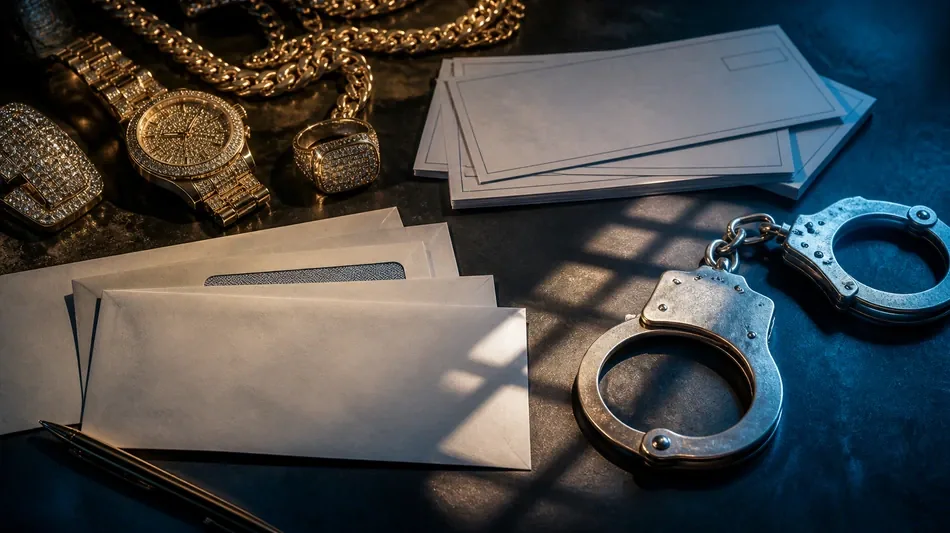
An aspiring Los Angeles County rapper known as ColdheartedAC is among three defendants federally charged in an alleged scheme involving more than $8.1 million in stolen checks, including dozens of U.S. Treasury payments.
LOS ANGELES — An aspiring Los Angeles County rapper and two other defendants have been charged in federal court over an alleged stolen-check operation involving checks with a combined value exceeding $8.1 million.
Ada William Obayuwana, 31, of Quartz Hill, who uses the name ColdheartedAC, is among the defendants named in the case. Federal authorities allege that the group illegally obtained and possessed stolen checks and attempted to move money through accounts under their control.
The checks included more than 50 issued by the U.S. Treasury, according to authorities. Government checks can include tax refunds as well as payments connected to Social Security and veterans' benefits.
Prosecutors allege that stolen checks were deposited and that false identities were used as part of efforts to route proceeds into controlled accounts. The case involves checks originating from multiple victims and sources rather than a single theft.
Obayuwana was allegedly found with more than 100 stolen checks in his vehicle in Oceanside, according to reports describing the federal case. The volume of checks and their combined face value form the basis of the multimillion-dollar allegations.
Two co-defendants from Westminster and San Diego have also been charged. Federal prosecutors are pursuing the matter as a coordinated financial-fraud case involving possession and attempted use of stolen payment instruments.
The inclusion of U.S. Treasury checks adds a federal dimension because the alleged losses involve government-issued payments intended for taxpayers and benefit recipients.
Authorities have not alleged that every check in the defendants' possession was successfully cashed. The stated $8.1 million figure represents the combined value of checks involved in the alleged scheme.
The case follows a broader law-enforcement focus on stolen mail and check fraud, in which checks can be altered, deposited using fraudulent identities or transferred through accounts opened or controlled by participants in a scheme.
The defendants face allegations that must be proven in court. They are presumed innocent unless convicted through the judicial process.
A. Williams--BTZ