Danish PM calls March 24 election amid US, Russia tensions / Photo: © Ritzau Scanpix/AFP

 London
 13 °C
13 °C

 Manchester
13 °C
Manchester
13 °C
 Glasgow
 16 °C
16 °C
 Dublin
14 °C
Dublin
14 °C
 Belfast
14 °C
Belfast
14 °C
 Washington
 22 °C
22 °C
 Denver
18 °C
Denver
18 °C
 Atlanta
23 °C
Atlanta
23 °C
 Dallas
23 °C
Dallas
23 °C
 Houston Texas
29 °C
Houston Texas
29 °C
 New Orleans
27 °C
New Orleans
27 °C
 El Paso
 23 °C
23 °C
 Phoenix
32 °C
Phoenix
32 °C
 Los Angeles
24 °C
San Diego
25 °C
San Francisco
15 °C
Chicago
17 °C
Minneapolis
14 °C
Seattle
Los Angeles
24 °C
San Diego
25 °C
San Francisco
15 °C
Chicago
17 °C
Minneapolis
14 °C
Seattle
 17 °C
Portland
23 °C
Salt Lake City
20 °C
Las Vegas
32 °C
Miami
26 °C
Jacksonville
27 °C
San Antonio
23 °C
Bermuda
24 °C
Nassau
20 °C
Iqaluit
3 °C
Yellowknife
6 °C
Anchorage
4 °C
Fairbanks
1 °C
Barrow
-2 °C
Calgary
10 °C
Edmonton
26 °C
Winnipeg
7 °C
Goose Bay
19 °C
Halifax
19 °C
Boston
21 °C
Ottawa
18 °C
Toronto
21 °C
Detroit
23 °C
Cleveland
25 °C
New York
17 °C
Portland
23 °C
Salt Lake City
20 °C
Las Vegas
32 °C
Miami
26 °C
Jacksonville
27 °C
San Antonio
23 °C
Bermuda
24 °C
Nassau
20 °C
Iqaluit
3 °C
Yellowknife
6 °C
Anchorage
4 °C
Fairbanks
1 °C
Barrow
-2 °C
Calgary
10 °C
Edmonton
26 °C
Winnipeg
7 °C
Goose Bay
19 °C
Halifax
19 °C
Boston
21 °C
Ottawa
18 °C
Toronto
21 °C
Detroit
23 °C
Cleveland
25 °C
New York
 23 °C
Baltimore
22 °C
Philadelphia
22 °C
Nuuk (Godthåb)
2 °C
Hong Kong
23 °C
Baltimore
22 °C
Philadelphia
22 °C
Nuuk (Godthåb)
2 °C
Hong Kong
 30 °C
Singapore
29 °C
Melbourne
26 °C
Canberra
15 °C
Adelaide
17 °C
Darwin
31 °C
Perth
30 °C
Singapore
29 °C
Melbourne
26 °C
Canberra
15 °C
Adelaide
17 °C
Darwin
31 °C
Perth
 19 °C
Fort Worth
23 °C
Honolulu
28 °C
Sydney
24 °C
Johannesburg
5 °C
Dubai
31 °C
Mumbai
19 °C
Fort Worth
23 °C
Honolulu
28 °C
Sydney
24 °C
Johannesburg
5 °C
Dubai
31 °C
Mumbai
 30 °C
Zürich
15 °C
Tokyo
20 °C
Seoul
18 °C
Delhi
24 °C
Beijing
17 °C
Riyadh
28 °C
Prague
12 °C
Pennsylvania
21 °C
Valletta
23 °C
Manama
32 °C
Warsaw
10 °C
Stockholm
13 °C
30 °C
Zürich
15 °C
Tokyo
20 °C
Seoul
18 °C
Delhi
24 °C
Beijing
17 °C
Riyadh
28 °C
Prague
12 °C
Pennsylvania
21 °C
Valletta
23 °C
Manama
32 °C
Warsaw
10 °C
Stockholm
13 °C
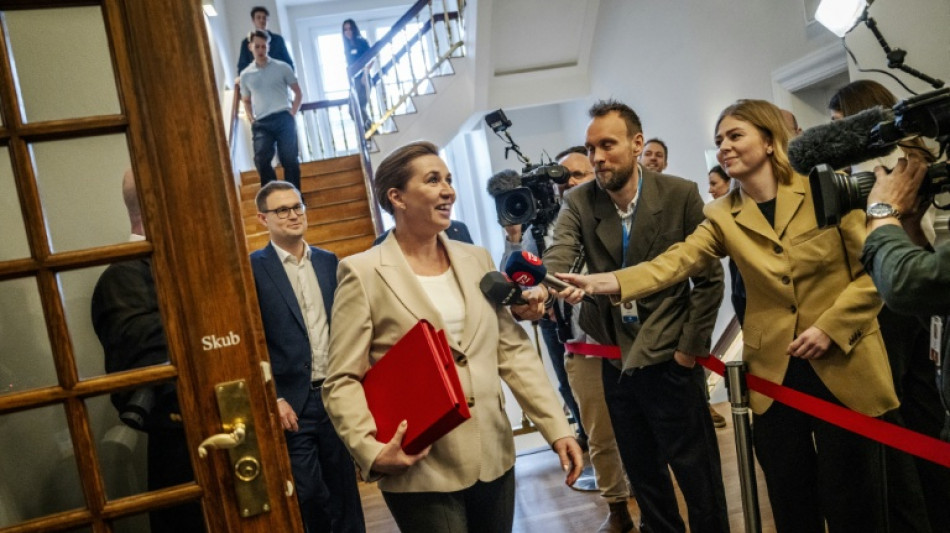
Denmark's Prime Minister Mette Frederiksen on Thursday called a general election for March 24, against a backdrop of tensions with the United States and Russia.
The vote comes as Denmark's relationship with the United States -- which Copenhagen considers its closest ally -- has been strained over US President Donald Trump's desire to acquire Greenland.
"Dear Danes, today I have asked His Majesty the King to call an election for the Folketing," Denmark's parliament, Frederiksen told the house.
"Whether I will continue to be your prime minister depends on how strong a mandate you give the Social Democrats in the parliamentary election to be held on March 24, 2026," she added.
Under the Danish system, Frederiksen had to call an election within four years of the last vote on November 1, 2022.
Frederiksen presented the outlines of her election platform, which included a reform of the retirement age, the introduction of a wealth tax and maintaining a strict migration policy.
Championing an extremely tough line, the far-right Danish People's Party wants to focus on deportations and the fight against inflation.
Morten Messerschmidt, the Danish People's Party leader, said that "the prime minister, obviously, is not interested in which policies she's going to conduct."
"She's only interested in becoming prime minister again," he told AFP.
Frederiksen stressed that Denmark must continue to rearm and help protect Europe against Russia, as the continent grapples with new geopolitical realities since Trump's return to the White House.
- Unrest -
"Security policy is and will remain the very foundation of Danish politics for many, many years to come," Frederiksen said.
Copenhagen is among Ukraine's strongest military and civilian backers.
The Nordic country would need to face "threats from the west and the risk of terror from the south", Frederiksen said.
"We must stand united in Europe," she insisted. Over the next four years, Denmark will also have to "stand on our own feet", she declared, adding that relations with Washington would have to be redefined.
Denmark and Greenland are holding talks with the United States about the future of Greenland, an autonomous Arctic territory which Trump has argued is crucial for US "national security".
Earlier threats he made to seize the island, by force if necessary, have ebbed since he struck a "framework" deal with NATO Secretary General Mark Rutte to ensure greater US influence.
Copenhagen has nevertheless insisted that only Greenland and Denmark can make decisions on the island's fate.
NATO has since launched a mission, dubbed Arctic Sentry, to strengthen its presence in the Arctic.
"Even though there is now an election campaign in Denmark, the world out there is not waiting for us. Its unrest continues unabated and, as everyone knows, for example the dispute over Greenland is not over yet," Frederiksen said.
- Greenland boost -
Frederiksen, who hails from a long-standing Social Democratic family, became Denmark's youngest-ever head of government when she elected in 2019 at the age of 41.
The daughter of a typesetter and a childcare assistant, she won re-election in 2022 by forming a coalition government with centre-right parties.
The diplomatic tensions over Greenland, have boosted Frederiksen's popularity.
"I think it's typical of her to make it that quick when the surveys, which have been out for some time now, are going in her direction," IT consultant Jacob Sorensen told AFP as he had not been suprised by the announcement.
But the 33-year-old said the prime minister's party would not get his vote, noting that "she's no good for Denmark".
The Social Democrats suffered setbacks in European and local elections last year.
The party lost nearly half of the municipalities under its control, including the capital, Copenhagen, ending more than a century of Social Democrat rule.
Retiree Glenn Lulloff told AFP he was done with the Social Democrats.
"Before, I was a red guy. But today, I'm sure I will go to the blue bloc," he told AFP, referring to the country's right-wing parties.
According to a poll published last week by broadcaster TV2, 21 percent of voters intended to vote for the Social Democrats.
D. O'Sullivan--BTZ