Major US naval, air buildup sets stage for potential Iran war / Photo: © US NAVY/AFP/File

 London
 12 °C
12 °C

 Manchester
 14 °C
14 °C
 Glasgow
 16 °C
16 °C
 Dublin
13 °C
Dublin
13 °C
 Belfast
13 °C
Belfast
13 °C
 Washington
 21 °C
21 °C
 Denver
 15 °C
15 °C
 Atlanta
22 °C
Atlanta
22 °C
 Dallas
23 °C
Dallas
23 °C
 Houston Texas
27 °C
Houston Texas
27 °C
 New Orleans
27 °C
New Orleans
27 °C
 El Paso
22 °C
El Paso
22 °C
 Phoenix
29 °C
Phoenix
29 °C
 Los Angeles
22 °C
San Diego
22 °C
San Francisco
15 °C
Chicago
16 °C
Minneapolis
11 °C
Seattle
15 °C
Portland
21 °C
Salt Lake City
17 °C
Las Vegas
28 °C
Miami
26 °C
Jacksonville
26 °C
San Antonio
23 °C
Bermuda
24 °C
Nassau
20 °C
Iqaluit
4 °C
Yellowknife
6 °C
Anchorage
3 °C
Fairbanks
1 °C
Barrow
-6 °C
Calgary
8 °C
Edmonton
25 °C
Winnipeg
5 °C
Goose Bay
19 °C
Halifax
19 °C
Boston
20 °C
Ottawa
18 °C
Toronto
19 °C
Detroit
21 °C
Cleveland
24 °C
New York
22 °C
Baltimore
21 °C
Philadelphia
22 °C
Nuuk (Godthåb)
2 °C
Hong Kong
31 °C
Singapore
32 °C
Melbourne
27 °C
Canberra
Los Angeles
22 °C
San Diego
22 °C
San Francisco
15 °C
Chicago
16 °C
Minneapolis
11 °C
Seattle
15 °C
Portland
21 °C
Salt Lake City
17 °C
Las Vegas
28 °C
Miami
26 °C
Jacksonville
26 °C
San Antonio
23 °C
Bermuda
24 °C
Nassau
20 °C
Iqaluit
4 °C
Yellowknife
6 °C
Anchorage
3 °C
Fairbanks
1 °C
Barrow
-6 °C
Calgary
8 °C
Edmonton
25 °C
Winnipeg
5 °C
Goose Bay
19 °C
Halifax
19 °C
Boston
20 °C
Ottawa
18 °C
Toronto
19 °C
Detroit
21 °C
Cleveland
24 °C
New York
22 °C
Baltimore
21 °C
Philadelphia
22 °C
Nuuk (Godthåb)
2 °C
Hong Kong
31 °C
Singapore
32 °C
Melbourne
27 °C
Canberra
 15 °C
Adelaide
18 °C
Darwin
15 °C
Adelaide
18 °C
Darwin
 33 °C
Perth
33 °C
Perth
 22 °C
Fort Worth
23 °C
Honolulu
27 °C
Sydney
24 °C
Johannesburg
5 °C
Dubai
31 °C
Mumbai
22 °C
Fort Worth
23 °C
Honolulu
27 °C
Sydney
24 °C
Johannesburg
5 °C
Dubai
31 °C
Mumbai
 31 °C
Zürich
15 °C
Tokyo
20 °C
Seoul
20 °C
Delhi
29 °C
Beijing
19 °C
Riyadh
29 °C
Prague
11 °C
Pennsylvania
20 °C
Valletta
23 °C
Manama
32 °C
Warsaw
9 °C
Stockholm
13 °C
31 °C
Zürich
15 °C
Tokyo
20 °C
Seoul
20 °C
Delhi
29 °C
Beijing
19 °C
Riyadh
29 °C
Prague
11 °C
Pennsylvania
20 °C
Valletta
23 °C
Manama
32 °C
Warsaw
9 °C
Stockholm
13 °C
The massive US military buildup in the Middle East, including warships, fighter jets, and refueling aircraft, lays the foundation for a potentially sustained campaign against Iran -- should President Donald Trump give the order.
Trump -- who ordered strikes on Iran last year -- has repeatedly threatened Tehran with further military action if ongoing talks do not reach a replacement for the nuclear deal the US president tore up in 2018, during his first term in office.
The presence of "so much firepower... in the region creates a momentum of its own," said Susan Ziadeh, a senior advisor at the Center for Strategic and International Studies.
"Sometimes that momentum is a little hard to just put the brakes on and say, that's it, we're not doing anything," Ziadeh said during a panel discussion Wednesday.
- Ships -
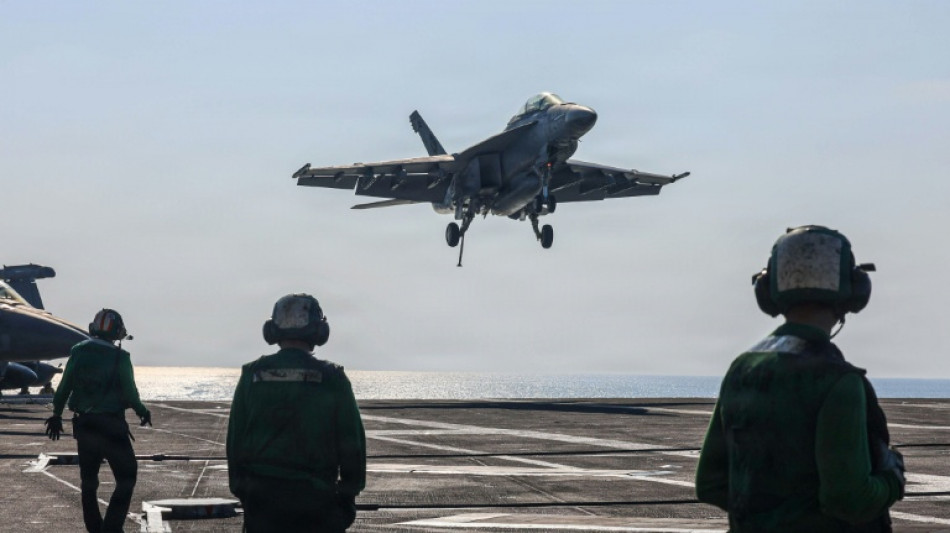
Washington currently has 13 warships in the Middle East: one aircraft carrier -- the USS Abraham Lincoln -- nine destroyers and three littoral combat ships, with more on the way, according to a US official.
The USS Gerald R. Ford -- the world's largest aircraft carrier -- is currently in the Atlantic Ocean en route from the Caribbean to the Middle East, after being ordered there by Trump earlier this month. It is accompanied by three destroyers.
It is rare for there to be two US aircraft carriers -- which carry dozens of warplanes and are crewed by thousands of sailors -- in the Middle East.
The United States had two of the massive warships in the region in June last year when it targeted three Iranian nuclear sites during Israel's 12-day campaign of strikes on Iran.
- Aircraft -
The United States has also sent a large fleet of aircraft to the Middle East, according to open-source intelligence accounts on X and flight-tracking website Flightradar24.
These include F-22 Raptor stealth fighter jets, F-15 and F-16 warplanes, and the KC-135 aerial refueling aircraft that are needed to sustain their operations.
On Wednesday, Flightradar24 showed multiple KC-135s flying near or in the Middle East, as well as E3 Sentry airborne warning and control aircraft and cargo planes operating in the region.
- Protests, threats, talks -
Trump ordered the Lincoln to the Middle East as Iran cracked down on protests that were initially driven by economic grievances, but which turned into a mass movement against the Islamic republic.
The clerical leadership that took power after the 1979 Islamic revolution responded to the demonstrations with deadly force and has held onto power, with many opponents of the system looking to outside intervention as the most likely driver of change.
Trump had repeatedly warned Iran that if it killed protesters, the United States would intervene militarily, and also encouraged Iranians to take over state institutions, saying "help is on the way."
He pulled back from ordering strikes last month, saying Tehran had halted more than 800 executions under pressure from Washington, but has since renewed threats against Iran.
US and Iranian officials held talks in Geneva on Tuesday aimed at averting US military intervention, with Iran saying afterward that they had agreed on "guiding principles" for a deal.
But White House Press Secretary Karoline Leavitt said Wednesday that while there was "a little bit of progress made," the two sides are "still very far apart on some issues."
Leavitt also told journalists there are "many reasons and arguments that one could make for a strike against Iran," adding: "Iran would be very wise to make a deal."
L. Solowjow--BTZ