Syria offensive leaves Turkey's Kurds on edge / Photo: © AFP

 London
 21 °C
21 °C

 Manchester
 18 °C
18 °C
 Glasgow
 19 °C
19 °C
 Dublin
17 °C
Dublin
17 °C
 Belfast
 16 °C
16 °C
 Washington
22 °C
Washington
22 °C
 Denver
 11 °C
11 °C
 Atlanta
22 °C
Atlanta
22 °C
 Dallas
22 °C
Dallas
22 °C
 Houston Texas
25 °C
Houston Texas
25 °C
 New Orleans
28 °C
New Orleans
28 °C
 El Paso
17 °C
El Paso
17 °C
 Phoenix
26 °C
Phoenix
26 °C
 Los Angeles
 20 °C
San Diego
20 °C
San Diego
 20 °C
San Francisco
14 °C
Chicago
15 °C
Minneapolis
8 °C
Seattle
13 °C
Portland
12 °C
Salt Lake City
15 °C
Las Vegas
22 °C
Miami
29 °C
Jacksonville
28 °C
San Antonio
24 °C
Bermuda
27 °C
Nassau
22 °C
Iqaluit
4 °C
Yellowknife
4 °C
Anchorage
20 °C
San Francisco
14 °C
Chicago
15 °C
Minneapolis
8 °C
Seattle
13 °C
Portland
12 °C
Salt Lake City
15 °C
Las Vegas
22 °C
Miami
29 °C
Jacksonville
28 °C
San Antonio
24 °C
Bermuda
27 °C
Nassau
22 °C
Iqaluit
4 °C
Yellowknife
4 °C
Anchorage
 1 °C
Fairbanks
-1 °C
Barrow
-8 °C
Calgary
6 °C
Edmonton
23 °C
Winnipeg
4 °C
Goose Bay
17 °C
Halifax
22 °C
Boston
23 °C
Ottawa
15 °C
Toronto
12 °C
Detroit
13 °C
Cleveland
14 °C
New York
22 °C
Baltimore
22 °C
Philadelphia
22 °C
Nuuk (Godthåb)
4 °C
Hong Kong
1 °C
Fairbanks
-1 °C
Barrow
-8 °C
Calgary
6 °C
Edmonton
23 °C
Winnipeg
4 °C
Goose Bay
17 °C
Halifax
22 °C
Boston
23 °C
Ottawa
15 °C
Toronto
12 °C
Detroit
13 °C
Cleveland
14 °C
New York
22 °C
Baltimore
22 °C
Philadelphia
22 °C
Nuuk (Godthåb)
4 °C
Hong Kong
 30 °C
Singapore
29 °C
Melbourne
28 °C
Canberra
13 °C
Adelaide
12 °C
Darwin
28 °C
Perth
16 °C
Fort Worth
23 °C
Honolulu
25 °C
Sydney
18 °C
Johannesburg
20 °C
Dubai
36 °C
Mumbai
34 °C
Zürich
21 °C
Tokyo
20 °C
Seoul
14 °C
Delhi
31 °C
Beijing
16 °C
Riyadh
39 °C
Prague
19 °C
Pennsylvania
21 °C
Valletta
26 °C
Manama
35 °C
Warsaw
21 °C
Stockholm
17 °C
30 °C
Singapore
29 °C
Melbourne
28 °C
Canberra
13 °C
Adelaide
12 °C
Darwin
28 °C
Perth
16 °C
Fort Worth
23 °C
Honolulu
25 °C
Sydney
18 °C
Johannesburg
20 °C
Dubai
36 °C
Mumbai
34 °C
Zürich
21 °C
Tokyo
20 °C
Seoul
14 °C
Delhi
31 °C
Beijing
16 °C
Riyadh
39 °C
Prague
19 °C
Pennsylvania
21 °C
Valletta
26 °C
Manama
35 °C
Warsaw
21 °C
Stockholm
17 °C
Turkey's Kurds are hoping that Ankara's bid to end the decades-long PKK conflict won't be hurt by Damascus' lightning offensive against Kurdish fighters in northern Syria that was backed by Turkey.
A close ally of the new post Bashar al-Assad Syrian leadership, Ankara has been engaged in dialogue with the jailed founder of the Kurdistan Workers' Party (PKK) Abdullah Ocalan whose fighters fought a four-decade insurgency that cost some 50,000 lives.
But that process has been largely stalled amid a stand-off between the Kurdish-led SDF that controls swathes of northeastern Syria and Damascus which wants the force integrated into the central state.
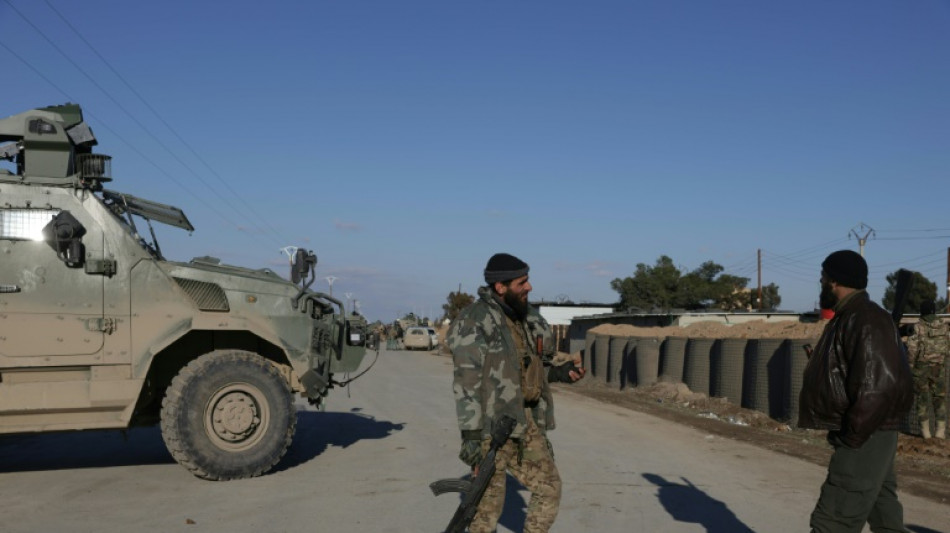
That standoff, which triggered weeks of clashes, came to a head over the weekend when Syrian troops made rapid advances in Kurdish-controlled areas and President Ahmed al-Sharaa announced a ceasefire deal to enforce his integration plans.
Ankara hailed the offensive as a "fight against terrorism." But the Syrian action, which began earlier this month, sparked protests in Turkey, where Kurds account for a fifth of its 86 million population.
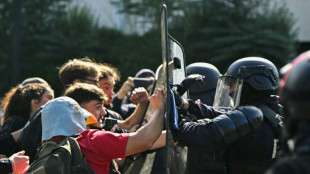
Despite heavy snow, at least 500 protesters rallied Monday in Diyarbakir, the main city in the Kurdish-majority southeast, where clashes erupted as police tried to stop them marching, an AFP correspondent said.
They used tear gas and rubber bullets to break up the protest and made at least 20 arrests, the AFP correspondent said.
Turkey has long been hostile to the US-backed SDF, seeing it as an extension of the PKK and a major threat along the 900-kilometre (550-mile) border it shares with Syria.
- 'Sabotage' -
On Sunday night, President Recep Tayyip Erdogan told his Syrian counterpart Turkey's support "will continue to increase.. particularly in the fight against terrorism".
"Turkey is a powerful actor on the ground and an effective one at the negotiating table," wrote Erdogan's communications chief Burhanettin Duran on X.
"The ceasefire and agreement for (the SDF's) full integration... marks an important stage," he wrote.
For the Kurds, the offensive was a tough blow to their hopes of preserving their autonomous administration.
Several days of fierce fighting earlier this month pushed SDF forces out of Aleppo, and over the weekend, government troops also took Raqa, a city the SDF had held since recapturing it from Islamic State militants nearly a decade ago.
But Turkey's support drew anger back home, with Ocalan warning the violence was "an attempt to sabotage" the ongoing peace process, in a message sent via the pro-Kurdish DEM party.
DEM -- which has spent over a year shuttling between Ankara and Ocalan -- accused the government of "pure hypocrisy".
"You cannot treat those you call 'citizens' on this side of the border as 'enemies' on the other," it said.
"You cannot be constructive in Ankara and destructive in Syria."
Speaking to AFP, one of DEM's Diyarbakir leaders Abbas Sahin said the operation was "a threat" to the peace process which had been "severely tested" but "must continue".
Bayram Bozyel, head of Diyarbakir-based Kurdistan Socialist Party (PSK) said Turkey's support for actions against Kurds in Syria was "causing unease among Kurds in Turkey"
“We don't know how the PKK will react because (Ankara's) policy has sparked a deep sense of distrust among Kurds," he said.
- 'No other choice' -
Despite everything, Bozyel believes Turkey "will continue the (peace) process and the PKK disarmament" because it had no other choice.
"Otherwise the PKK will pose an even greater threat to Turkey."
Last year, in response to a call by Ocalan, the PKK announced the end of its armed struggle against Turkey, saying it wanted to embrace a democratic struggle to defend Kurdish rights.
But six weeks ago, one of its senior leaders told AFP they would take no further steps without Turkey reciprocating.
"All the steps (Ocalan) initiated have been implemented... there will be no further actions taken," commander Amed Malazgirt said.
W. Winogradow--BTZ