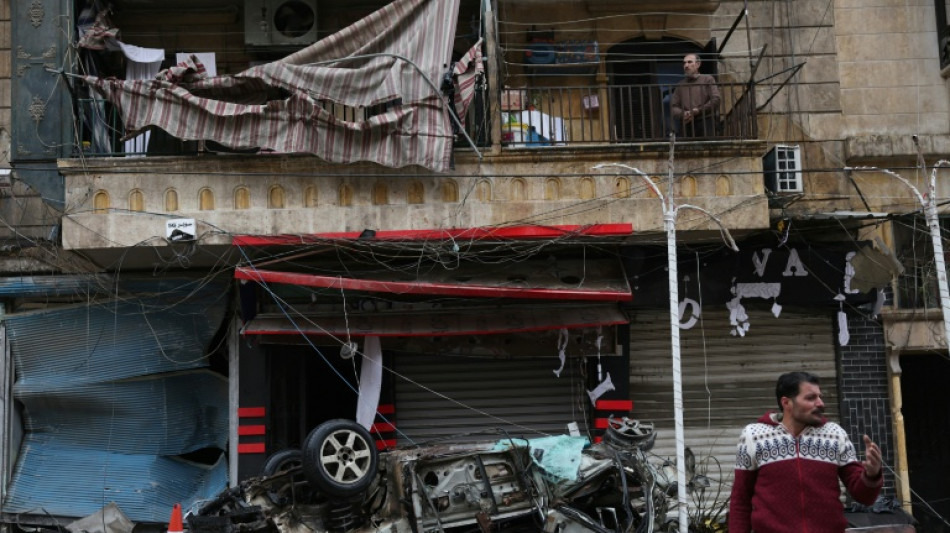
Syrians in Kurdish area of Aleppo pick up pieces after clashes / Photo: © AFP

 London
 21 °C
21 °C

 Manchester
 19 °C
19 °C
 Glasgow
 18 °C
18 °C
 Dublin
 18 °C
18 °C
 Belfast
15 °C
Belfast
15 °C
 Washington
27 °C
Washington
27 °C
 Denver
16 °C
Denver
16 °C
 Atlanta
24 °C
Atlanta
24 °C
 Dallas
23 °C
Dallas
23 °C
 Houston Texas
28 °C
Houston Texas
28 °C
 New Orleans
 30 °C
30 °C
 El Paso
18 °C
El Paso
18 °C
 Phoenix
28 °C
Phoenix
28 °C
 Los Angeles
24 °C
San Diego
24 °C
San Francisco
14 °C
Chicago
17 °C
Minneapolis
13 °C
Seattle
14 °C
Portland
15 °C
Salt Lake City
20 °C
Las Vegas
23 °C
Miami
30 °C
Jacksonville
30 °C
San Antonio
24 °C
Bermuda
28 °C
Nassau
25 °C
Iqaluit
4 °C
Yellowknife
5 °C
Anchorage
Los Angeles
24 °C
San Diego
24 °C
San Francisco
14 °C
Chicago
17 °C
Minneapolis
13 °C
Seattle
14 °C
Portland
15 °C
Salt Lake City
20 °C
Las Vegas
23 °C
Miami
30 °C
Jacksonville
30 °C
San Antonio
24 °C
Bermuda
28 °C
Nassau
25 °C
Iqaluit
4 °C
Yellowknife
5 °C
Anchorage
 0 °C
Fairbanks
-2 °C
Barrow
-9 °C
Calgary
10 °C
Edmonton
25 °C
Winnipeg
8 °C
Goose Bay
15 °C
Halifax
26 °C
Boston
26 °C
Ottawa
16 °C
Toronto
15 °C
Detroit
15 °C
Cleveland
15 °C
New York
26 °C
Baltimore
26 °C
Philadelphia
26 °C
Nuuk (Godthåb)
4 °C
Hong Kong
29 °C
Singapore
29 °C
Melbourne
30 °C
Canberra
0 °C
Fairbanks
-2 °C
Barrow
-9 °C
Calgary
10 °C
Edmonton
25 °C
Winnipeg
8 °C
Goose Bay
15 °C
Halifax
26 °C
Boston
26 °C
Ottawa
16 °C
Toronto
15 °C
Detroit
15 °C
Cleveland
15 °C
New York
26 °C
Baltimore
26 °C
Philadelphia
26 °C
Nuuk (Godthåb)
4 °C
Hong Kong
29 °C
Singapore
29 °C
Melbourne
30 °C
Canberra
 13 °C
Adelaide
11 °C
Darwin
27 °C
Perth
13 °C
Adelaide
11 °C
Darwin
27 °C
Perth
 15 °C
Fort Worth
23 °C
Honolulu
25 °C
Sydney
18 °C
Johannesburg
18 °C
Dubai
34 °C
Mumbai
15 °C
Fort Worth
23 °C
Honolulu
25 °C
Sydney
18 °C
Johannesburg
18 °C
Dubai
34 °C
Mumbai
 33 °C
Zürich
20 °C
Tokyo
20 °C
Seoul
11 °C
Delhi
28 °C
Beijing
11 °C
Riyadh
36 °C
Prague
19 °C
Pennsylvania
26 °C
Valletta
24 °C
Manama
35 °C
Warsaw
19 °C
Stockholm
16 °C
33 °C
Zürich
20 °C
Tokyo
20 °C
Seoul
11 °C
Delhi
28 °C
Beijing
11 °C
Riyadh
36 °C
Prague
19 °C
Pennsylvania
26 °C
Valletta
24 °C
Manama
35 °C
Warsaw
19 °C
Stockholm
16 °C
Residents of a Kurdish neighbourhood in Syria's second city of Aleppo passed through government checkpoints Sunday to find blackened walls, destroyed vehicles and debris-littered streets as they returned home after days of deadly clashes.
While they picked up the pieces in the city's Ashrafiyeh neighbourhood, the city's only other Kurdish-majority district Sheikh Maqsud still remained off limits after suffering the worst of the fighting.
Many locals like wheelchair-bound Abdul Qader Satar returned to Ashrafiyeh on Sunday to inspect their homes after days of violence.
"I left on the first day and took refuge in one of the mosques," the 34-year-old told AFP while loading belongings onto his wheelchair.
"We left quickly with only the clothes on our backs... and now we are back to check on the house."
Others said they remained in their homes despite the violence, hoping calm would prevail between the government in Damascus and the Kurdish fighters.
"We didn't want things to get this bad. I wish the Kurdish leadership had responded to the Syrian state. We've had enough bloodshed," said Mohammed Bitar, 39, who stayed in the Ashrafieh neighbourhood.
"There's no Arab, no Kurd, we're all Syrians."
But the deadly clashes that erupted in the Kurdish-majority neighbourhoods on Tuesday left dozens dead and displaced around 155,000 people, according to Syrian authorities.
Syria's government has since taken full control of the two areas as of Sunday, after agreeing the transfer of Kurdish fighters from the districts to Kurdish autonomous areas in the country's northeast.
- 'Closed military zone' -
In the streets of Ashrafiyeh, crumbled walls had turned black from explosions while families and children carried blankets and bags home to inspect damage to their homes under a heavy security presence.
"We were sitting safely in our homes... suddenly, heavy gunfire erupted. We left our homes under the bullets and fled," clothing seller Yahya al-Sufi, 49, told AFP in Ashrafiyeh.
"When we returned, we found holes in the walls and our homes had been looted... Now that things have calmed down, we're back to repair the walls and restore the water and electricity," he added, while supervising workers repairing the holes in his wall.
While many left the neighbourhood, Ammar Abdel Qader chose to stay with his family.
Standing in front of the pharmacy where he works, the 48-year-old said "there was fear of the bombing, and most people left, but my family and I stayed and took refuge in the inner rooms".
"Now normal life has returned to Ashrafiyeh, things are good, and people are returning to their homes."
The last area to fall to the Syria army, the Sheikh Maqsud neighbourhood near Ashrafiyeh, was still closed off to those who wanted to return.
Kurdish fighters had entrenched themselves in a hospital in the area until Syrian authorities announced their transfer on Sunday.
An interior ministry source told AFP the neighbourhood was still considered a "closed military zone" despite the departures.
Ambulances later entered Sheikh Maqsud as authorities combed the area after the last Kurdish fighters had left.
- 'We will fight' -
Syrian authorities and the Observatory both said the violence in the districts killed dozens.
In Qamishli city in the Kurdish-controlled northeast, the evacuated fighters were met with tears and pledges of vengeance from hundreds of people who gathered to greet them.
Upon his arrival, one fighter vowed "revenge" after embracing his mother as they both wept.
An AFP correspondent saw crossed-out images of Syrian President Ahmed al-Sharaa, Turkish Foreign Minister Hakan Fidan and US envoy Tom Barrack, as people chanted against the Syrian leader.
"We will avenge Sheikh Maqsud... we will avenge our fighters, we will avenge our martyrs," Umm Dalil, 55, said.
"The Kurdish people will not fall, the Kurdish people will triumph, we will fight until the end and victory will be ours."
strs/mam-lk/nad/jfx
S. Soerensen--BTZ