Bangladesh PM hopeful Rahman returns from exile ahead of polls / Photo: © AFP

 London
 18 °C
18 °C

 Manchester
 18 °C
18 °C
 Glasgow
15 °C
Glasgow
15 °C
 Dublin
 14 °C
14 °C
 Belfast
 14 °C
14 °C
 Washington
30 °C
Washington
30 °C
 Denver
 23 °C
23 °C
 Atlanta
26 °C
Atlanta
26 °C
 Dallas
24 °C
Dallas
24 °C
 Houston Texas
31 °C
Houston Texas
31 °C
 New Orleans
 31 °C
31 °C
 El Paso
20 °C
El Paso
20 °C
 Phoenix
32 °C
Phoenix
32 °C
 Los Angeles
32 °C
San Diego
36 °C
San Francisco
18 °C
Chicago
18 °C
Minneapolis
15 °C
Seattle
16 °C
Portland
20 °C
Salt Lake City
24 °C
Las Vegas
30 °C
Miami
31 °C
Jacksonville
26 °C
San Antonio
23 °C
Bermuda
28 °C
Nassau
27 °C
Iqaluit
5 °C
Yellowknife
6 °C
Anchorage
0 °C
Fairbanks
-2 °C
Barrow
-5 °C
Calgary
12 °C
Edmonton
24 °C
Winnipeg
14 °C
Goose Bay
17 °C
Halifax
27 °C
Boston
29 °C
Ottawa
17 °C
Toronto
17 °C
Detroit
18 °C
Cleveland
17 °C
New York
29 °C
Baltimore
30 °C
Philadelphia
29 °C
Nuuk (Godthåb)
5 °C
Hong Kong
29 °C
Singapore
29 °C
Melbourne
29 °C
Canberra
Los Angeles
32 °C
San Diego
36 °C
San Francisco
18 °C
Chicago
18 °C
Minneapolis
15 °C
Seattle
16 °C
Portland
20 °C
Salt Lake City
24 °C
Las Vegas
30 °C
Miami
31 °C
Jacksonville
26 °C
San Antonio
23 °C
Bermuda
28 °C
Nassau
27 °C
Iqaluit
5 °C
Yellowknife
6 °C
Anchorage
0 °C
Fairbanks
-2 °C
Barrow
-5 °C
Calgary
12 °C
Edmonton
24 °C
Winnipeg
14 °C
Goose Bay
17 °C
Halifax
27 °C
Boston
29 °C
Ottawa
17 °C
Toronto
17 °C
Detroit
18 °C
Cleveland
17 °C
New York
29 °C
Baltimore
30 °C
Philadelphia
29 °C
Nuuk (Godthåb)
5 °C
Hong Kong
29 °C
Singapore
29 °C
Melbourne
29 °C
Canberra
 13 °C
Adelaide
11 °C
Darwin
27 °C
Perth
13 °C
Adelaide
11 °C
Darwin
27 °C
Perth
 13 °C
Fort Worth
23 °C
Honolulu
26 °C
Sydney
18 °C
Johannesburg
15 °C
Dubai
33 °C
Mumbai
13 °C
Fort Worth
23 °C
Honolulu
26 °C
Sydney
18 °C
Johannesburg
15 °C
Dubai
33 °C
Mumbai
 32 °C
Zürich
19 °C
Tokyo
19 °C
Seoul
9 °C
Delhi
27 °C
Beijing
9 °C
Riyadh
33 °C
Prague
16 °C
Pennsylvania
29 °C
Valletta
24 °C
Manama
34 °C
Warsaw
14 °C
Stockholm
14 °C
32 °C
Zürich
19 °C
Tokyo
19 °C
Seoul
9 °C
Delhi
27 °C
Beijing
9 °C
Riyadh
33 °C
Prague
16 °C
Pennsylvania
29 °C
Valletta
24 °C
Manama
34 °C
Warsaw
14 °C
Stockholm
14 °C
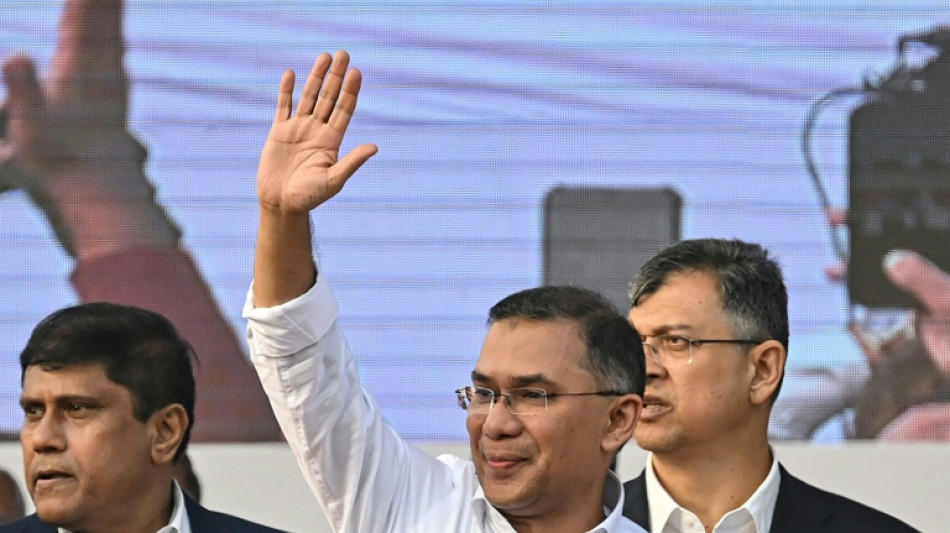
Aspiring prime minister and political heavyweight Tarique Rahman returned to Bangladesh on Thursday, ending 17 years in self-imposed exile with a promise to deliver safety and justice if his party wins next year's elections.
Huge crowds of joyous supporters waving flags, banners and posters welcomed Rahman, the son of former prime minister Khaleda Zia and acting chairman of her popular Bangladesh Nationalist Party (BNP).
"Today, I want to say that I have a plan for my country... a safe state that people have long hoped for," Rahman, 60, said in a first speech after his homecoming.
"It is time we build a country together. This country belongs to the people in the hills and the plains, to Muslims, Buddhists, Christians and Hindus."
A visibly emotional Rahman earlier took off his shoes, stood on the grass outside the airport and scooped up soil as a mark of reverence to his motherland.
He waved to supporters before ducking into a convoy under tight security, according to video footage shared by his party.
BNP backers gathered in the capital Dhaka since the early morning, plastering the streets with banners and festoons bearing images of Rahman, who is expected to take the reins from his ailing mother.
Patriotic songs blared from loudspeakers while cut-outs depicted the seasoned politician riding a stallion.
Party supporter Alamgir Hossain said Bangladesh was in a "dire situation" and that only Rahman "can fix it".
Rahman, known in Bangladesh as Tarique Zia, left Bangladesh for London in 2008, following an arrest on corruption charges and after what he described as political persecution.
As acting party chairman, Rahman will lead the BNP through the February 12 general elections -- the first polls since a student-led uprising last year toppled the autocratic government of Sheikh Hasina.
- 'Repay the debt' -
The BNP is widely seen as an election frontrunner, with Rahman expected to be put forward as prime minister if his party wins a majority.
Rahman's 80-year-old mother Zia is undergoing treatment in intensive care at a hospital in Dhaka after years of ill health and imprisonment.
Rahman said his mother had "sacrificed everything" for the country and that he had come to meet her and express "my gratitude".
Rahman's return comes amid unrest over the killing of popular student leader Sharif Osman Hadi, a staunch India-critic who took part in last year's mass uprising.
Hadi, 32, was shot by masked assailants earlier this month in Dhaka, and later died of his wounds at a Singapore hospital.
His death set off violent protests with mobs torching several buildings, including two major newspapers deemed to favour India and a prominent cultural institution.
Mobs also threw stones at the Indian High Commission in the port city of Chattogram, where visa services have since been suspended.
Rahman urged his supporters to remain vigilant "in the face of conspiracies".
"If the nation is to repay the... debt owed to its martyrs, it must build the country the people have long yearned for," he said.
- 'Symbol of hope' -
Dhaka's diplomatic ties with its historical ally New Delhi have worsened since the uprising, with ousted prime minister Hasina seeking refuge in India.
India has said it was considering Bangladesh's request to extradite Hasina, who was sentenced to death in absentia for orchestrating a deadly crackdown on the uprising.
With anti-India sentiments rising in the majority Muslim nation, a Hindu garment worker was accused of blasphemy and lynched by a mob on December 18.
Jahan Panna, a former BNP lawmaker, said she hoped Rahman's return would end the "cycle of anarchy".
"Rahman is the symbol of hope for this country," Panna, 55, told AFP.
Rahman faced a slew of criminal cases, but since Hasina's fall his most severe punishment has been overturned: a life sentence handed down in absentia for a 2004 grenade attack on a political rally. He denied the charges.
In Britain, he kept a low profile but remained an outspoken figure on social media.
In June, he met in London with Muhammad Yunus, the 85-year-old Nobel Peace Prize winner leading the interim government until the February vote.
Hasina's Awami League party, a bitter rival of BNP, has been barred from contesting in the polls.
F. Burkhard--BTZ