Sahel juntas would have welcomed a coup in Benin: analysts / Photo: © AFP/File

 London
 16 °C
16 °C
 Manchester
17 °C
Manchester
17 °C
 Glasgow
 12 °C
12 °C
 Dublin
 14 °C
14 °C
 Belfast
13 °C
Belfast
13 °C
 Washington
31 °C
Washington
31 °C
 Denver
 27 °C
27 °C
 Atlanta
29 °C
Atlanta
29 °C
 Dallas
26 °C
Dallas
26 °C
 Houston Texas
 32 °C
32 °C
 New Orleans
 30 °C
30 °C
 El Paso
21 °C
El Paso
21 °C
 Phoenix
34 °C
Phoenix
34 °C
 Los Angeles
35 °C
San Diego
37 °C
San Francisco
22 °C
Chicago
18 °C
Minneapolis
17 °C
Seattle
20 °C
Portland
23 °C
Salt Lake City
27 °C
Las Vegas
33 °C
Miami
31 °C
Jacksonville
25 °C
San Antonio
24 °C
Bermuda
28 °C
Nassau
28 °C
Iqaluit
4 °C
Yellowknife
7 °C
Anchorage
3 °C
Fairbanks
0 °C
Barrow
Los Angeles
35 °C
San Diego
37 °C
San Francisco
22 °C
Chicago
18 °C
Minneapolis
17 °C
Seattle
20 °C
Portland
23 °C
Salt Lake City
27 °C
Las Vegas
33 °C
Miami
31 °C
Jacksonville
25 °C
San Antonio
24 °C
Bermuda
28 °C
Nassau
28 °C
Iqaluit
4 °C
Yellowknife
7 °C
Anchorage
3 °C
Fairbanks
0 °C
Barrow
 -2 °C
Calgary
16 °C
Edmonton
25 °C
Winnipeg
17 °C
Goose Bay
18 °C
Halifax
27 °C
Boston
29 °C
Ottawa
19 °C
Toronto
19 °C
Detroit
-2 °C
Calgary
16 °C
Edmonton
25 °C
Winnipeg
17 °C
Goose Bay
18 °C
Halifax
27 °C
Boston
29 °C
Ottawa
19 °C
Toronto
19 °C
Detroit
 18 °C
Cleveland
16 °C
New York
30 °C
Baltimore
31 °C
Philadelphia
30 °C
Nuuk (Godthåb)
5 °C
Hong Kong
18 °C
Cleveland
16 °C
New York
30 °C
Baltimore
31 °C
Philadelphia
30 °C
Nuuk (Godthåb)
5 °C
Hong Kong
 27 °C
Singapore
28 °C
Melbourne
27 °C
Canberra
13 °C
Adelaide
10 °C
Darwin
27 °C
Singapore
28 °C
Melbourne
27 °C
Canberra
13 °C
Adelaide
10 °C
Darwin
 24 °C
Perth
12 °C
Fort Worth
25 °C
Honolulu
28 °C
Sydney
18 °C
Johannesburg
13 °C
Dubai
33 °C
Mumbai
31 °C
Zürich
18 °C
Tokyo
19 °C
Seoul
9 °C
Delhi
25 °C
Beijing
9 °C
Riyadh
32 °C
Prague
15 °C
Pennsylvania
27 °C
Valletta
24 °C
Manama
33 °C
Warsaw
13 °C
Stockholm
14 °C
24 °C
Perth
12 °C
Fort Worth
25 °C
Honolulu
28 °C
Sydney
18 °C
Johannesburg
13 °C
Dubai
33 °C
Mumbai
31 °C
Zürich
18 °C
Tokyo
19 °C
Seoul
9 °C
Delhi
25 °C
Beijing
9 °C
Riyadh
32 °C
Prague
15 °C
Pennsylvania
27 °C
Valletta
24 °C
Manama
33 °C
Warsaw
13 °C
Stockholm
14 °C
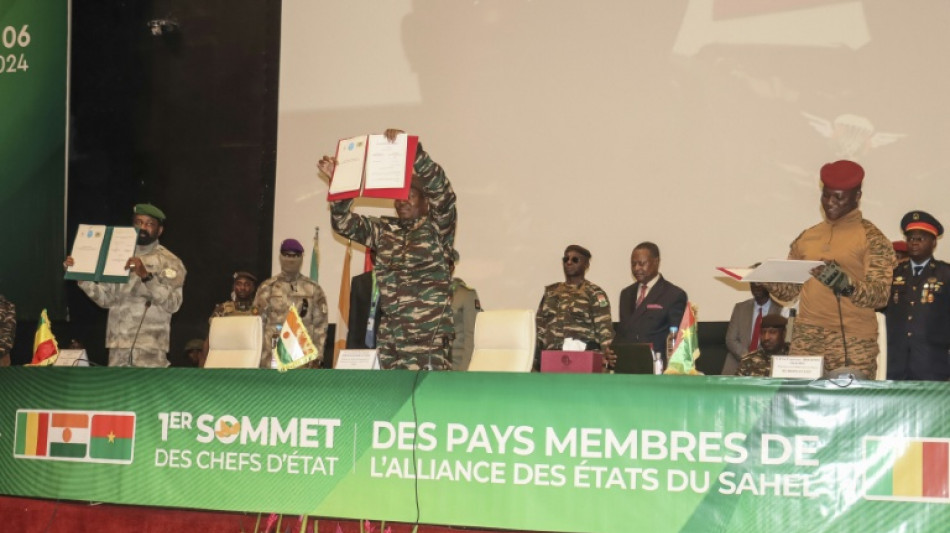
Military rulers in west Africa's Sahel region may well have celebrated had a recent coup attempt in Benin resulted in another anti-Western junta in their neighbourhood, analysts said.
Not least because Benin lies on the coast and access to ports is crucial for landlocked Burkina Faso, Mali and Niger -- whose rulers formed the Alliance of Sahel States (AES) in 2023.
However, although they would have welcomed likeminded allies in the region, observers point out there is no concrete evidence they had a hand in the coup attempt in Benin.
Analysts highlight an early flood of false information about the swiftly put-down putsch on December 7, as well as questions over whether the alleged ringleader is now in exile in one of their capitals.
"It is clear that the attempt to destabilise the regime in Cotonou was pushing Benin directly into the ranks of the AES," a west African diplomatic source said.
Even as the rebel soldiers appeared on national television in Benin's coastal city of Cotonou to announce President Patrice Talon's overthrow, social media accounts friendly to the junta-led trio of countries pumped out coordinated messages in support of the attempted coup.
Among them was pan-Africanist, anti-Western Beninese influencer Kemi Seba, who was quick to rejoice in Benin's "liberation day" with his 1.5 million followers.
Seba, who accuses Talon of being too close to former colonial master France, has been an adviser to Niger's strongman general Abdourahamane Tiani since last year and was granted a diplomatic passport.
"This haste speaks volumes: either the man knew, or he received instructions to amplify things well before the outcome," Fiacre Vidjingninou, a Benin expert in political and military sociology, wrote in the French-language Conflits magazine.
Benin has issued an international arrest warrant for Seba, alleging "advocacy of crimes against state security and incitement to rebellion".
Seba, whose real name is Stellio Gilles Robert Capo Chichi, has said he plans to "see the fight through to the end".
Alleged coup leader lieutenant-colonel Pascal Tigri is on the run and rumoured to be hiding in one of the Sahelian countries.
"If he is in an AES capital he is safe; there's no risk of him being handed over to Benin," said Seidik Abba, head of the International Centre for Studies and Reflections on the Sahel.
- Seeking a coastal ally -
Tiani seized power in Niger two years ago and has since closed the border with Benin over allegations it harbours "French bases" bent on destabilising his country.
Benin and France both deny the claim.
"If the coup had succeeded, it's certain that it would have been good news for the AES," Abba said.
"A change of regime would have initiated the beginning of normalisation with Benin. But at this stage, there is no material evidence showing that a Sahelian country transferred money or equipment to the putschists," he added.
Vidjingninou said the "subtlety of the method" was key.
"Moscow does the same in sub-Saharan Africa: shaping environments rather than issuing direct orders," he said.
The leaders of Burkina, Mali and Niger have made sovereignty their watchword, leaving the West African bloc ECOWAS, while turning away from traditional partner France and closer to Russia.
But they lack a foothold on the sea to transport goods, especially uranium from Niger, one of the world's leading producers of the radioactive metal.
The Economic Community of West African States (ECOWAS) at its summit on Sunday was careful not to lay blame on the AES.
"The overlapping economic interests between coastal and Sahelian countries remain strong," Abba said.
- Regional intervention -
Unlike the coups that toppled leaders in Niger, Mali and Burkina between 2020 and 2023, people did not come out onto Benin's streets in support.
A few hundred people even gathered over the weekend to condemn the attempted overthrow.
"The fear was that their attempt would resonate with the Beninese army and the local population; that didn't happen," a Western military source said.
The Republican Guard remained loyal to Talon, repelling an assault on his residence and gradually taking back control of the situation.
It was later helped by strikes from neighbouring Nigeria under the auspices of regional bloc ECOWAS, as well as intervention by French special forces.
During the coup that deposed Niger's president Mohamed Bazoum, the bloc had threatened intervention but ultimately did not act.
But in Benin, Nigerian President Bola Tinubu "seized a golden opportunity to underscore Nigeria's opposition to military coups and reassert its regional leadership", said Nnamdi Obasi, analyst at the International Crisis Group.
For the AES, meanwhile, the coup attempt was potentially a win-win.
"If the coup succeeds, the AES gains a coastal ally... if it fails, it pays no price -- no losses, no compromising footprint, while having tested the opponent's defences and identified their weaknesses for the next attempt," he said.
P.Grazvydas--BTZ