Amid escalating drug war, Ecuadorans electing a new president / Photo: © AFP/File

 London
 13 °C
13 °C
 Manchester
14 °C
Manchester
14 °C
 Glasgow
 9 °C
9 °C
 Dublin
17 °C
Dublin
17 °C
 Belfast
16 °C
Belfast
16 °C
 Washington
16 °C
Washington
16 °C
 Denver
 17 °C
17 °C
 Atlanta
20 °C
Atlanta
20 °C
 Dallas
22 °C
Dallas
22 °C
 Houston Texas
24 °C
Houston Texas
24 °C
 New Orleans
25 °C
New Orleans
25 °C
 El Paso
19 °C
El Paso
19 °C
 Phoenix
30 °C
Phoenix
30 °C
 Los Angeles
29 °C
San Diego
28 °C
San Francisco
19 °C
Chicago
13 °C
Minneapolis
10 °C
Seattle
Los Angeles
29 °C
San Diego
28 °C
San Francisco
19 °C
Chicago
13 °C
Minneapolis
10 °C
Seattle
 14 °C
Portland
18 °C
Salt Lake City
21 °C
Las Vegas
28 °C
Miami
14 °C
Portland
18 °C
Salt Lake City
21 °C
Las Vegas
28 °C
Miami
 28 °C
Jacksonville
24 °C
San Antonio
24 °C
Bermuda
26 °C
Nassau
13 °C
Iqaluit
-1 °C
Yellowknife
5 °C
Anchorage
5 °C
Fairbanks
1 °C
Barrow
-10 °C
Calgary
12 °C
Edmonton
14 °C
Winnipeg
7 °C
Goose Bay
15 °C
Halifax
15 °C
Boston
14 °C
Ottawa
13 °C
Toronto
12 °C
Detroit
13 °C
Cleveland
15 °C
New York
14 °C
Baltimore
16 °C
Philadelphia
28 °C
Jacksonville
24 °C
San Antonio
24 °C
Bermuda
26 °C
Nassau
13 °C
Iqaluit
-1 °C
Yellowknife
5 °C
Anchorage
5 °C
Fairbanks
1 °C
Barrow
-10 °C
Calgary
12 °C
Edmonton
14 °C
Winnipeg
7 °C
Goose Bay
15 °C
Halifax
15 °C
Boston
14 °C
Ottawa
13 °C
Toronto
12 °C
Detroit
13 °C
Cleveland
15 °C
New York
14 °C
Baltimore
16 °C
Philadelphia
 14 °C
Nuuk (Godthåb)
2 °C
Hong Kong
14 °C
Nuuk (Godthåb)
2 °C
Hong Kong
 29 °C
Singapore
32 °C
Melbourne
26 °C
Canberra
29 °C
Singapore
32 °C
Melbourne
26 °C
Canberra
 17 °C
Adelaide
18 °C
Darwin
17 °C
Adelaide
18 °C
Darwin
 32 °C
Perth
23 °C
Fort Worth
21 °C
Honolulu
25 °C
Sydney
21 °C
Johannesburg
13 °C
Dubai
33 °C
Mumbai
33 °C
Zürich
15 °C
Tokyo
21 °C
Seoul
20 °C
Delhi
33 °C
Beijing
23 °C
Riyadh
31 °C
Prague
9 °C
Pennsylvania
15 °C
Valletta
25 °C
Manama
33 °C
Warsaw
10 °C
Stockholm
12 °C
32 °C
Perth
23 °C
Fort Worth
21 °C
Honolulu
25 °C
Sydney
21 °C
Johannesburg
13 °C
Dubai
33 °C
Mumbai
33 °C
Zürich
15 °C
Tokyo
21 °C
Seoul
20 °C
Delhi
33 °C
Beijing
23 °C
Riyadh
31 °C
Prague
9 °C
Pennsylvania
15 °C
Valletta
25 °C
Manama
33 °C
Warsaw
10 °C
Stockholm
12 °C
Ecuadorans started voting for a new president Sunday in the midst of a drug war and a rash of political assassinations that cut short the bid of a popular candidate.
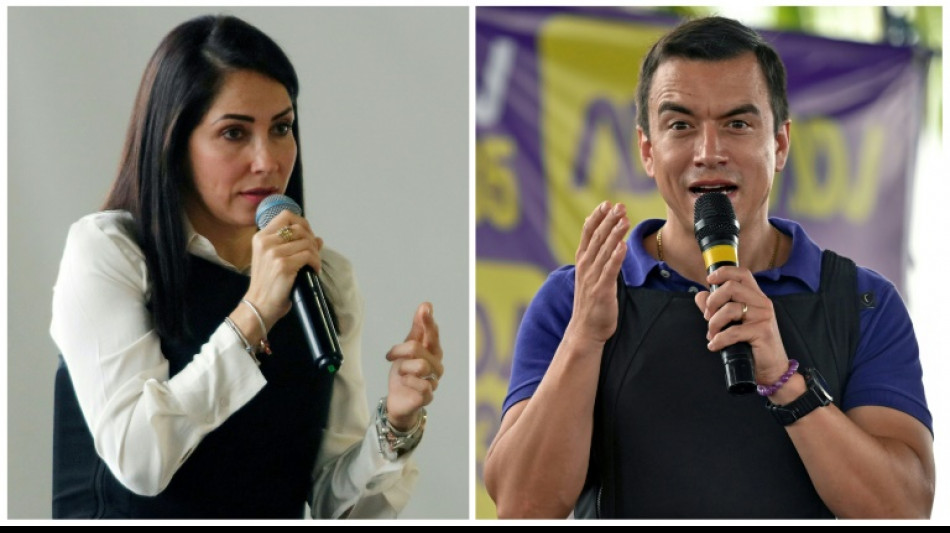
The finalists in this runoff election -- lawyer Luisa Gonzalez, 45, and banana empire heir Daniel Noboa, 35 -- campaigned in bullet-proof vests as a climate of fear grips the once-peaceful country.
Both have vowed to prioritize dealing with the escalating violence.
Long lines formed outside voting stations, which opened at 7:00 am (1200 GMT) amid a heavy police presence.
"It is a critical election," Freddy Escobar, a popular 49-year-old singer, told AFP, citing crime as his main worry. "I am voting in fear."
Indeed, the main concerns of Ecuadorans, according to recent polls, are crime and violence in a country where the murder rate quadrupled in the four years to 2022. Some 54,000 police have been deployed to keep the vote safe.
The first, preliminary results are expected in the early evening, the National Electoral Commission said.
Long a haven between major cocaine exporters Colombia and Peru, the South American nation has seen violence explode in recent years as enemy gangs with links to Mexican and Colombian cartels vie for control.
The fighting has seen at least 460 inmates massacred in prisons since February 2021 -- many beheaded or burned alive in mass riots.
And the bloodbath has spilled into the streets, with gangs dangling headless corpses from city bridges and detonating car bombs outside police stations in a show of force.
Some 3,600 Ecuadorans have been murdered so far this year, according to the Ecuadoran Organized Crime Observatory, including nearly a dozen politicians.
In August, the violence claimed the life of anti-graft and anti-cartel journalist and presidential candidate Fernando Villavicencio, mowed down in a barrage of submachine-gun fire after a campaign speech.
He had been polling in second place.
A state of emergency was declared after Villavicencio's assassination, and Noboa and Gonzalez both campaigned with heavy security details.
Reporters following them have also had to don protective jackets and helmets and travel in armored vehicles. Many have received death threats.
Seven suspects in Villavicencio's assassination were recently killed in prison.
- 'Change this country' -
Whoever wins Sunday will be elected to only 16 months in office -- completing the term of incumbent Guillermo Lasso, who called a snap vote to avoid possible impeachment for alleged embezzlement.
The winner will be allowed to run again for the 2025-29 presidential term, and the one after that.
Both relative unknowns, a win for either candidate would make history: Gonzalez becoming Ecuador's first woman president, or Noboa its youngest.
Gonzalez is the handpicked candidate of socialist ex-president Rafael Correa, who governed from 2007 to 2017 and lives in exile in Belgium to avoid serving an eight-year prison term for graft -- another major concern in the South American country.
Her rival, Noboa, is the son of one of Ecuador's richest men, who himself has five failed presidential bids to his name.
Closing their campaigns Thursday, both candidates promised a better future.
"Thank you for believing in this political project, for believing that the youth can change a country," Noboa told supporters in the southwestern fishing town of Muey.
"Together we are going to change this country."
For her part, Gonzalez traveled to Guayaquil, the city hardest hit by the recent violence, where she told supporters: "In unity we will raise this Ecuador... that cries out for peace, for security, for employment, for health, for medicine."
Ecuador has a poverty rate of 27 percent, with a quarter of the population either unemployed or holding down an informal job.
Opinion polls list unemployment as voters' second concern.
Gonzalez has promised more social spending if she is elected, especially on education and healthcare, while Noboa has vowed he will ensure "progress for everyone."
From eight candidates, Gonzalez took the most votes in the first voting round in August with 34 percent, followed by Noboa with 23 percent.
Opinion polls predict a close race Sunday, with a high percentage of undecided voters.
Neither Gonzalez nor Noboa will have the luxury of an absolute majority backing their projects in parliament, and with only 16 months in office, either would face an uphill battle to push through any reforms.
Voting is compulsory for 13.4 million eligible voters in the country of 16.9 million.
I. Johansson--BTZ