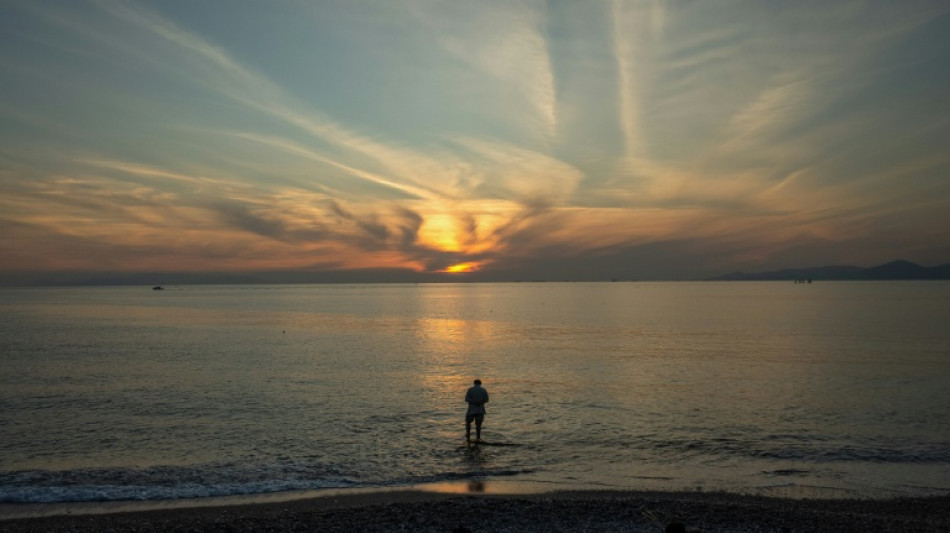
Greece expands sunbed-free beach list for 2026 / Photo: © AFP

 London
 21 °C
21 °C

 Manchester
 15 °C
15 °C
 Glasgow
16 °C
Glasgow
16 °C
 Dublin
16 °C
Dublin
16 °C
 Belfast
15 °C
Belfast
15 °C
 Washington
11 °C
Washington
11 °C
 Denver
 14 °C
14 °C
 Atlanta
16 °C
Atlanta
16 °C
 Dallas
21 °C
Dallas
21 °C
 Houston Texas
 24 °C
24 °C
 New Orleans
25 °C
New Orleans
25 °C
 El Paso
 18 °C
18 °C
 Phoenix
23 °C
Phoenix
23 °C
 Los Angeles
20 °C
San Diego
20 °C
San Francisco
16 °C
Chicago
16 °C
Minneapolis
15 °C
Seattle
Los Angeles
20 °C
San Diego
20 °C
San Francisco
16 °C
Chicago
16 °C
Minneapolis
15 °C
Seattle
 12 °C
Portland
16 °C
Salt Lake City
16 °C
Las Vegas
23 °C
Miami
12 °C
Portland
16 °C
Salt Lake City
16 °C
Las Vegas
23 °C
Miami
 25 °C
Jacksonville
25 °C
Jacksonville
 18 °C
San Antonio
24 °C
Bermuda
28 °C
Nassau
14 °C
Iqaluit
2 °C
Yellowknife
3 °C
Anchorage
6 °C
Fairbanks
0 °C
Barrow
-3 °C
Calgary
9 °C
Edmonton
13 °C
Winnipeg
15 °C
Goose Bay
6 °C
Halifax
14 °C
Boston
11 °C
Ottawa
7 °C
Toronto
9 °C
Detroit
9 °C
Cleveland
9 °C
New York
14 °C
Baltimore
13 °C
Philadelphia
14 °C
Nuuk (Godthåb)
1 °C
Hong Kong
28 °C
Singapore
30 °C
Melbourne
18 °C
San Antonio
24 °C
Bermuda
28 °C
Nassau
14 °C
Iqaluit
2 °C
Yellowknife
3 °C
Anchorage
6 °C
Fairbanks
0 °C
Barrow
-3 °C
Calgary
9 °C
Edmonton
13 °C
Winnipeg
15 °C
Goose Bay
6 °C
Halifax
14 °C
Boston
11 °C
Ottawa
7 °C
Toronto
9 °C
Detroit
9 °C
Cleveland
9 °C
New York
14 °C
Baltimore
13 °C
Philadelphia
14 °C
Nuuk (Godthåb)
1 °C
Hong Kong
28 °C
Singapore
30 °C
Melbourne
 23 °C
Canberra
15 °C
Adelaide
18 °C
Darwin
27 °C
Perth
16 °C
Fort Worth
23 °C
Honolulu
27 °C
Sydney
19 °C
Johannesburg
25 °C
Dubai
38 °C
Mumbai
31 °C
Zürich
21 °C
Tokyo
24 °C
Seoul
19 °C
Delhi
32 °C
Beijing
23 °C
Riyadh
41 °C
Prague
16 °C
Pennsylvania
10 °C
Valletta
26 °C
Manama
38 °C
Warsaw
15 °C
Stockholm
13 °C
23 °C
Canberra
15 °C
Adelaide
18 °C
Darwin
27 °C
Perth
16 °C
Fort Worth
23 °C
Honolulu
27 °C
Sydney
19 °C
Johannesburg
25 °C
Dubai
38 °C
Mumbai
31 °C
Zürich
21 °C
Tokyo
24 °C
Seoul
19 °C
Delhi
32 °C
Beijing
23 °C
Riyadh
41 °C
Prague
16 °C
Pennsylvania
10 °C
Valletta
26 °C
Manama
38 °C
Warsaw
15 °C
Stockholm
13 °C
Greece on Friday named over 250 beaches in environmentally important areas that must be left in their natural state, amid ongoing efforts to limit the impact of overtourism in its multi-billion-euro travel industry.
The initiative bans the use of umbrellas and sunbeds for hire in areas both on the mainland and islands, including many protected marine Natura 2000 sites, some of whom are vital grounds for endangered species such as loggerhead turtles and monk seals.
The initiative "seeks to ensure the effective protection of beaches that have particular aesthetic, geomorphological, or ecological value, as well as the preservation of the habitat types and the plant and animal species found on these specific beaches," the government said in a ministerial decision.
The updated list for 2026 includes 251 beaches compared to 238 last year, and 198 in 2024.
Amid growing concerns over the impact of overtourism on Greece's natural environment, authorities in recent years have dismantled illegal construction on coasts.
On Thursday, crews accompanied by riot police tore down beachfront shacks on the small island of Gavdos south of Crete that the local municipality had deemed a fire risk.
There was also controversy last year on the island of Milos over hotel construction near one of Greece's most famous beaches, the volcanic rock site of Sarakiniko.
In December, several mayors from the Cyclades and Dodecanese warned that overtourism was threatening the "very existence" of the islands.
Greece in 2025 set new records for tourist arrivals and revenue, the country's central bank said in February, with nearly 38 million travellers not counting cruise ship traffic.
The conservative government has also announced the creation and expansion of national marine parks, but has also come under criticism over deals for gas drilling in the Ionian Sea and south of Crete.
N. Nilsson--BTZ