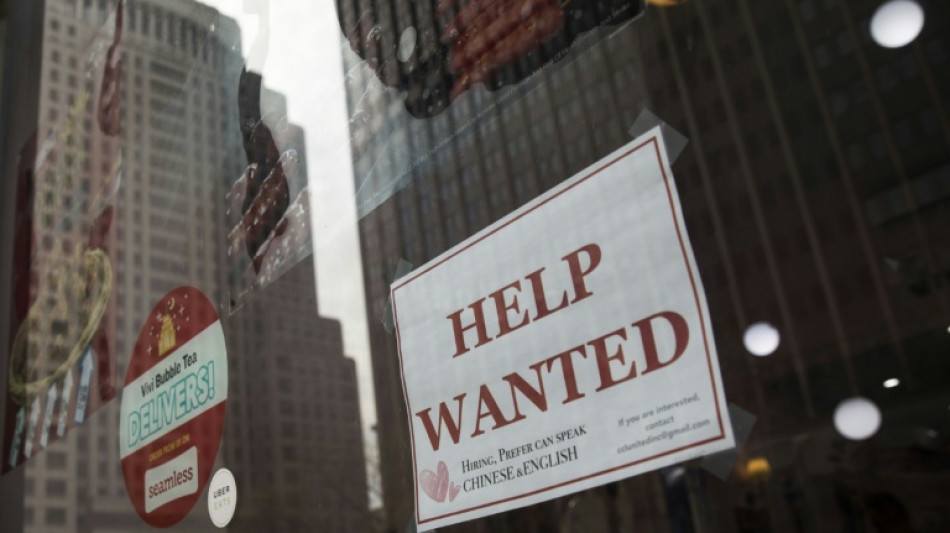
US job growth slows, posing questions for Trump before midterms / Photo: © GETTY IMAGES NORTH AMERICA/AFP

 London
 19 °C
19 °C

 Manchester
 18 °C
18 °C
 Glasgow
15 °C
Glasgow
15 °C
 Dublin
 18 °C
18 °C
 Belfast
16 °C
Belfast
16 °C
 Washington
19 °C
Washington
19 °C
 Denver
26 °C
Denver
26 °C
 Atlanta
25 °C
Atlanta
25 °C
 Dallas
31 °C
Dallas
31 °C
 Houston Texas
31 °C
Houston Texas
31 °C
 New Orleans
29 °C
New Orleans
29 °C
 El Paso
26 °C
El Paso
26 °C
 Phoenix
32 °C
Phoenix
32 °C
 Los Angeles
26 °C
San Diego
28 °C
San Francisco
17 °C
Chicago
Los Angeles
26 °C
San Diego
28 °C
San Francisco
17 °C
Chicago
 19 °C
Minneapolis
15 °C
Seattle
12 °C
Portland
14 °C
Salt Lake City
23 °C
Las Vegas
31 °C
Miami
31 °C
Jacksonville
26 °C
San Antonio
31 °C
Bermuda
19 °C
Minneapolis
15 °C
Seattle
12 °C
Portland
14 °C
Salt Lake City
23 °C
Las Vegas
31 °C
Miami
31 °C
Jacksonville
26 °C
San Antonio
31 °C
Bermuda
 26 °C
Nassau
16 °C
Iqaluit
4 °C
Yellowknife
7 °C
Anchorage
7 °C
Fairbanks
2 °C
Barrow
0 °C
Calgary
8 °C
Edmonton
25 °C
Winnipeg
16 °C
Goose Bay
19 °C
Halifax
14 °C
Boston
13 °C
Ottawa
23 °C
Toronto
22 °C
Detroit
20 °C
Cleveland
20 °C
New York
17 °C
Baltimore
18 °C
Philadelphia
14 °C
Nuuk (Godthåb)
3 °C
Hong Kong
26 °C
Nassau
16 °C
Iqaluit
4 °C
Yellowknife
7 °C
Anchorage
7 °C
Fairbanks
2 °C
Barrow
0 °C
Calgary
8 °C
Edmonton
25 °C
Winnipeg
16 °C
Goose Bay
19 °C
Halifax
14 °C
Boston
13 °C
Ottawa
23 °C
Toronto
22 °C
Detroit
20 °C
Cleveland
20 °C
New York
17 °C
Baltimore
18 °C
Philadelphia
14 °C
Nuuk (Godthåb)
3 °C
Hong Kong
 28 °C
Singapore
28 °C
Singapore
 29 °C
Melbourne
27 °C
Canberra
11 °C
Adelaide
13 °C
Darwin
26 °C
Perth
14 °C
Fort Worth
31 °C
Honolulu
26 °C
Sydney
16 °C
Johannesburg
21 °C
Dubai
33 °C
Mumbai
29 °C
Melbourne
27 °C
Canberra
11 °C
Adelaide
13 °C
Darwin
26 °C
Perth
14 °C
Fort Worth
31 °C
Honolulu
26 °C
Sydney
16 °C
Johannesburg
21 °C
Dubai
33 °C
Mumbai
 29 °C
Zürich
21 °C
Tokyo
18 °C
Seoul
18 °C
Delhi
22 °C
Beijing
18 °C
Riyadh
35 °C
Prague
18 °C
Pennsylvania
16 °C
Valletta
29 °C
Zürich
21 °C
Tokyo
18 °C
Seoul
18 °C
Delhi
22 °C
Beijing
18 °C
Riyadh
35 °C
Prague
18 °C
Pennsylvania
16 °C
Valletta
 24 °C
Manama
35 °C
Warsaw
12 °C
Stockholm
13 °C
24 °C
Manama
35 °C
Warsaw
12 °C
Stockholm
13 °C
The United States posted weaker-than-expected job growth in June as new data showed the labor market is facing headwinds ahead of testing midterm elections for President Donald Trump's Republicans.
Total nonfarm payroll employment grew by 57,000 and the unemployment rate fell slightly to 4.2 percent, the US Bureau of Labor Statistics (BLS) said in a statement on Thursday.
After months of seesawing growth and contraction, the US job market posted strong gains in the last three months -- but Thursday's data revised some of those numbers down.
Employment in April and May were revised down by 74,000 jobs, the BLS said.
June's data badly missed market expectations, with economists polled by Dow Jones Newswires and the Wall Street Journal expecting growth of 115,000 jobs.
Nevertheless, job growth remained in positive territory, with the US Federal Reserve not expected to intervene on the labor side of its mandate.
All eyes have been on the Fed since new chair Kevin Warsh headed his first rate-setting meeting last month, with the central bank indicating its focus was firmly on taming surging inflation.
"While the headline may be negative -- slowing job growth -- there could be a silver lining to markets as it could force some of the more hawkish Fed governors to reconsider quickly raising rates to fight inflation," said Chris Zaccarelli of Northlight Asset Management.
Fed policymakers have indicated they expect one rate hike by the end of the year in order to curb inflation, but a slowing job market may give them pause.
- Wages lag inflation -
Inflation in the world's largest economy has been hitting fresh three-year highs for months, as the fallout of President Trump's war on Iran ripples through the economy.
Thursday's data showed that average hourly earnings for US workers increased by 3.5 percent over the year, lagging behind inflation by 0.7 percentage points.
The disparity means that US workers have, on average, lost purchasing power, with their wages not keeping up with price rises.
Kathy Bostjancic, chief economist at Nationwide, read Thursday's data as positive overall, with job growth affected by "negative drag" from higher energy prices for hirers.
The unemployment rate's ticking down was mainly due to a drop in the labor force participation rate, she said.
The main job growth sectors included health care and social assistance, while the leisure and hospitality sector lost jobs after a strong showing the previous month.
Health care has been one of the strongest sectors for US jobs in recent months, as an aging population drives up demand for jobs at hospitals and residential care.
In June, the sector added 22,000 jobs, slower than its average monthly gain over the last 12 months, the BLS said.
Social assistance, a related sector, added 25,000 jobs -- higher than its average monthly gain over the year.
- Political implications -
But jobs across a slew of major sectors remained stagnant, including in manufacturing, retail trade, transportation, financial activities.
The Republican Party faces midterm elections in November, with Democrats seeking to wrest control of both houses of Congress.
Trump has implemented wide-ranging and often disruptive policies aimed at bringing back manufacturing jobs to the United States.
Democratic Senator Elizabeth Warren responded to Thursday's data by saying Trump's "failing economic agenda is weakening the labor market."
The White House, however, dismissed criticism of its performance, with spokesman Kush Desai saying the "labor market remains solid thanks to President Trump's economic agenda."
"Americans can count on the best being yet to come."
F. Burkhard--BTZ