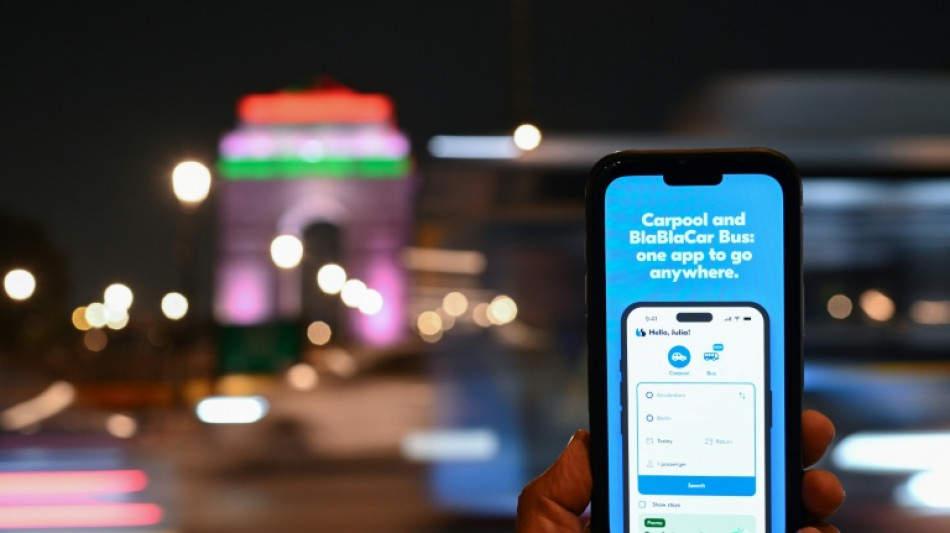
Energy crunch fuels car pool growth / Photo: © AFP

 London
 16 °C
16 °C
 Manchester
 13 °C
13 °C
 Glasgow
13 °C
Glasgow
13 °C
 Dublin
 16 °C
16 °C
 Belfast
 15 °C
15 °C
 Washington
 17 °C
17 °C
 Denver
 28 °C
28 °C
 Atlanta
 27 °C
27 °C
 Dallas
34 °C
Dallas
34 °C
 Houston Texas
32 °C
Houston Texas
32 °C
 New Orleans
30 °C
New Orleans
30 °C
 El Paso
29 °C
El Paso
29 °C
 Phoenix
35 °C
Phoenix
35 °C
 Los Angeles
30 °C
San Diego
Los Angeles
30 °C
San Diego
 29 °C
San Francisco
19 °C
Chicago
19 °C
Minneapolis
15 °C
Seattle
15 °C
Portland
17 °C
Salt Lake City
26 °C
Las Vegas
34 °C
Miami
31 °C
Jacksonville
27 °C
San Antonio
34 °C
Bermuda
26 °C
Nassau
16 °C
Iqaluit
4 °C
Yellowknife
7 °C
Anchorage
9 °C
Fairbanks
9 °C
Barrow
0 °C
Calgary
9 °C
Edmonton
26 °C
Winnipeg
16 °C
Goose Bay
21 °C
Halifax
13 °C
Boston
13 °C
Ottawa
24 °C
Toronto
23 °C
Detroit
22 °C
Cleveland
20 °C
New York
16 °C
Baltimore
15 °C
Philadelphia
15 °C
Nuuk (Godthåb)
3 °C
Hong Kong
27 °C
Singapore
29 °C
San Francisco
19 °C
Chicago
19 °C
Minneapolis
15 °C
Seattle
15 °C
Portland
17 °C
Salt Lake City
26 °C
Las Vegas
34 °C
Miami
31 °C
Jacksonville
27 °C
San Antonio
34 °C
Bermuda
26 °C
Nassau
16 °C
Iqaluit
4 °C
Yellowknife
7 °C
Anchorage
9 °C
Fairbanks
9 °C
Barrow
0 °C
Calgary
9 °C
Edmonton
26 °C
Winnipeg
16 °C
Goose Bay
21 °C
Halifax
13 °C
Boston
13 °C
Ottawa
24 °C
Toronto
23 °C
Detroit
22 °C
Cleveland
20 °C
New York
16 °C
Baltimore
15 °C
Philadelphia
15 °C
Nuuk (Godthåb)
3 °C
Hong Kong
27 °C
Singapore
 28 °C
Melbourne
28 °C
Canberra
10 °C
Adelaide
12 °C
Darwin
25 °C
Perth
14 °C
Fort Worth
34 °C
Honolulu
27 °C
Sydney
15 °C
Johannesburg
20 °C
Dubai
33 °C
Mumbai
28 °C
Zürich
16 °C
Tokyo
18 °C
Seoul
17 °C
Delhi
22 °C
Beijing
18 °C
Riyadh
33 °C
Prague
15 °C
Pennsylvania
14 °C
Valletta
23 °C
Manama
35 °C
Warsaw
12 °C
Stockholm
12 °C
28 °C
Melbourne
28 °C
Canberra
10 °C
Adelaide
12 °C
Darwin
25 °C
Perth
14 °C
Fort Worth
34 °C
Honolulu
27 °C
Sydney
15 °C
Johannesburg
20 °C
Dubai
33 °C
Mumbai
28 °C
Zürich
16 °C
Tokyo
18 °C
Seoul
17 °C
Delhi
22 °C
Beijing
18 °C
Riyadh
33 °C
Prague
15 °C
Pennsylvania
14 °C
Valletta
23 °C
Manama
35 °C
Warsaw
12 °C
Stockholm
12 °C
Rising fuel prices triggered by the Middle East war are driving a sharp increase in carpooling, with a ride-sharing platform reporting a surge in new users seeking cheaper ways to travel.
The world's largest carpooling platform BlaBlaCar said soaring energy costs have pushed 600,000 additional drivers onto the app this year -- 20 percent more than initially projected -- as commuters look to offset the rising cost of fuel.
In India, its single biggest market with more than 20 million users in 2025, the number of passengers has increased by 40 percent since the start of the US-Israeli airstrikes against Iran on February 28.
Last year, the global carpooling leader posted record-breaking figures in the world's most populous country India -- outpacing Brazil with 19 million users and France with seven million, according to Benjamin Retourne, the platform's product director.
This trend has been more pronounced in countries where fuel price increases driven by the war have been sudden and significant, combined with limited government support, such as in France.
The platform works by connecting drivers and passengers willing to travel together between cities to share costs, with the app in most of its 21 operating nations taking a 20 percent commission.
- Saves fuel -
Indian Prime Minister Narendra Modi earlier in May urged the country's 1.4 billion citizens to save fuel by making greater use of carpooling and public transport.
India imports approximately half of its crude oil via the Strait of Hormuz, which Tehran effectively closed in retaliation to US-Israeli strikes launched in February.
Retourne said a decade ago, when BlaBlaCar first launched in India, even "after two or three years, it just wasn't catching on".
The company, founded in France in 2006, therefore stopped investing in the world's fastest growing economy but kept its application running from its Paris headquarters, unlike many large foreign groups that outsourced their services to India.
Growth finally began to pick up after the Covid-19 pandemic, driven by the country's economic and digital acceleration, as well as word of mouth.
Retourne pointed to a growth in private car ownership as well as rapid urbanisation, with 200 million additional city dwellers over the past decade.
"People are very connected," he said, adding that "today, wherever you go, there is 5G".
That proved to be the "recipe for carpooling to take off".
But he was surprised that a driving factor was not the cost -- but rather to avoid often crowded buses or trains.
"The number one reason people choose carpooling is not price, but comfort", he said.
The market potential remains vast, with "a new segment of the population" eager to travel for leisure and visit friends and family.
- 'Saves time' -
Assistant bank manager Pratyush Anuraj, 24, from India's financial capital Mumbai, said he used the carpooling platform to travel to his family's home in Pune every weekend -- a 150 kilometre (93 mile) journey of around 2.5 hours.
"It's cheaper than the train, the bus, or a private taxi," he said. "It also saves time, as there are few stops and the vehicle doesn't wait beyond the scheduled time."
He does, however, point out some drawbacks: either the trip is often cancelled at the last minute, or the drivers don't answer calls.
So far, the French platform has not monetised carpooling in India, where people pay each other directly, often using the popular digital UPI mobile telephones payment systems.
It now wants to evolve its model.
The next objective is to "build a platform that aggregates multiple modes of transport" -- connecting cars to buses and trains.
H. Müller--BTZ