Greek visa scheme gives Turks easier entry to islands in EU / Photo: © AFP

 London
 19 °C
19 °C

 Manchester
17 °C
Manchester
17 °C
 Glasgow
 11 °C
11 °C
 Dublin
 20 °C
20 °C
 Belfast
19 °C
Belfast
19 °C
 Washington
21 °C
Washington
21 °C
 Denver
 23 °C
23 °C
 Atlanta
32 °C
Atlanta
32 °C
 Dallas
 36 °C
36 °C
 Houston Texas
35 °C
Houston Texas
35 °C
 New Orleans
33 °C
New Orleans
33 °C
 El Paso
31 °C
El Paso
31 °C
 Phoenix
36 °C
Phoenix
36 °C
 Los Angeles
24 °C
San Diego
Los Angeles
24 °C
San Diego
 24 °C
San Francisco
16 °C
Chicago
18 °C
Minneapolis
14 °C
Seattle
19 °C
Portland
20 °C
Salt Lake City
24 °C
Las Vegas
32 °C
Miami
24 °C
San Francisco
16 °C
Chicago
18 °C
Minneapolis
14 °C
Seattle
19 °C
Portland
20 °C
Salt Lake City
24 °C
Las Vegas
32 °C
Miami
 31 °C
Jacksonville
30 °C
San Antonio
35 °C
Bermuda
30 °C
Nassau
21 °C
Iqaluit
4 °C
Yellowknife
18 °C
Anchorage
10 °C
Fairbanks
8 °C
Barrow
31 °C
Jacksonville
30 °C
San Antonio
35 °C
Bermuda
30 °C
Nassau
21 °C
Iqaluit
4 °C
Yellowknife
18 °C
Anchorage
10 °C
Fairbanks
8 °C
Barrow
 -1 °C
Calgary
25 °C
Edmonton
35 °C
Winnipeg
19 °C
Goose Bay
14 °C
Halifax
17 °C
Boston
19 °C
Ottawa
14 °C
Toronto
15 °C
Detroit
16 °C
Cleveland
17 °C
New York
22 °C
Baltimore
21 °C
Philadelphia
22 °C
Nuuk (Godthåb)
4 °C
Hong Kong
-1 °C
Calgary
25 °C
Edmonton
35 °C
Winnipeg
19 °C
Goose Bay
14 °C
Halifax
17 °C
Boston
19 °C
Ottawa
14 °C
Toronto
15 °C
Detroit
16 °C
Cleveland
17 °C
New York
22 °C
Baltimore
21 °C
Philadelphia
22 °C
Nuuk (Godthåb)
4 °C
Hong Kong
 28 °C
Singapore
27 °C
Melbourne
27 °C
Canberra
8 °C
Adelaide
9 °C
Darwin
25 °C
Perth
13 °C
Fort Worth
36 °C
Honolulu
28 °C
Sydney
14 °C
Johannesburg
28 °C
Singapore
27 °C
Melbourne
27 °C
Canberra
8 °C
Adelaide
9 °C
Darwin
25 °C
Perth
13 °C
Fort Worth
36 °C
Honolulu
28 °C
Sydney
14 °C
Johannesburg
 17 °C
Dubai
34 °C
Mumbai
27 °C
Zürich
15 °C
Tokyo
24 °C
Seoul
18 °C
Delhi
27 °C
Beijing
16 °C
Riyadh
33 °C
Prague
14 °C
Pennsylvania
20 °C
Valletta
25 °C
Manama
33 °C
Warsaw
11 °C
Stockholm
13 °C
17 °C
Dubai
34 °C
Mumbai
27 °C
Zürich
15 °C
Tokyo
24 °C
Seoul
18 °C
Delhi
27 °C
Beijing
16 °C
Riyadh
33 °C
Prague
14 °C
Pennsylvania
20 °C
Valletta
25 °C
Manama
33 °C
Warsaw
11 °C
Stockholm
13 °C
For Ikra Altumsek, and many other Turkish tourists, a visa-on-arrival scheme to visit several of Greece's Aegean islands has greatly simplified travel to this corner of the EU, previously off-limits without a hard-to-get Schengen visa.
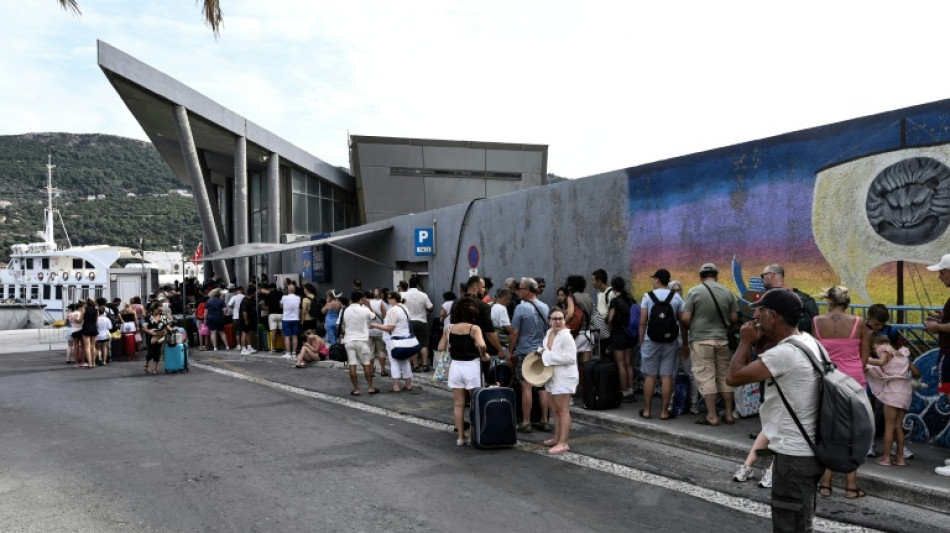
"I think Samos was the perfect place to start," the 21-year-old university student said, wheeling her luggage alongside her mother as they waited for a ferry off the Greek island of Samos.
They were heading back to Kusadasi, on Turkey's Aegean coast after a sun-drenched vacation -- Altumsek's first trip abroad.
With its turquoise waters, quiet coves, traditional villages and waterfront restaurants, Samos -- situated just opposite the Turkish coast -- combines beaches and natural beauty with a rich cultural heritage, including ancient sites linked to Pythagoras, one of the most famous figures of the ancient Greek world.
Turkish-flagged boats carrying tourists are a constant presence along the waterfront, arriving and departing throughout the day, highlighting the steady flow of Turkish visitors to the Greek island.
"Τhe food is delicious. I have a 17-year-old son, and he keeps asking me, 'Mum, when are we going to Greece to eat?'," said Nevin Cagliguney, 51.
The crowds arriving on Samos reflect the diversity of society in Turkey, which is not part of the European Union but has ambitions to one day join it.
Among the visitors are young travellers discovering the island for the first time, as well as families including women wearing headscarves, accompanied by their spouses and children in strollers.
Many restaurants display Turkish-language menus outside their entrances.
- 'Door visa' -
Introduced in April 2024, the visa-on-arrival scheme, known in Turkey as the "door visa" (kapi vizesi), initially covered 10 Greek islands before being renewed and expanded to 12 last year.
The list of islands -- all near the Turkish coast -- includes Rhodes, Chios and Kos.
It allows Turkish citizens to visit participating islands for up to seven days without obtaining a full Schengen visa in advance, but cannot be extended and does not permit onward travel to mainland Greece or to other Schengen-area countries.
"Getting a Schengen visa is becoming increasingly difficult for Turks, but this new system makes it easy and fast for us to visit the Greek islands," said Emirhan Gurses, a 21-year-old student from Manisa.
Nearly 1.5 million Turks visited the country in 2025, up from 1.2 million in 2024, according to Bank of Greece figures. Turkish travel agents say most of them took advantage of the express visa to see the islands.
For many Turks, it has offered an affordable alternative at a time when soaring inflation has made holidays at home increasingly expensive.
During a visit to Ankara in February, Greek Prime Minister Kyriakos Mitsotakis hailed the scheme as "particularly successful".
"In the last year alone, hundreds of thousands of Turkish friends have travelled to the Greek islands, bringing our peoples closer together," Mitsotakis said, adding that both countries want to renew the programme.
The island visa is a bright spot in an otherwise tense backdrop between the two NATO allies and neighbours, and not just because of the centuries-old Greek-Turkish rivalry.
Ankara recently complained about Athens shutting down Turkish-language schools, a move the Greeks blamed on declining pupil numbers.
Athens in turn has been irritated by a Turkish plan to enshrine into domestic law claims over parts of the Aegean.
- 'Great support' -
The visa-on-arrival scheme comes as Turkish demand for travel to the European Union has outpaced the capacity of many consulates to process Schengen visa applications, leaving applicants facing long waits, rising costs and uncertainty over approvals.
For tour guide Mikail Esabalioglu, a Greek resident of Samos originally from Istanbul, Turkish visitors have become an increasingly important part of the island's tourism economy.
"We receive many Turkish guests, especially from Izmir and other parts of Turkey's Aegean coast," he said.
But the programme could be improved even further, he said "because visitors sometimes have to wait a long time at the entrance and the arrival process can be difficult".
Samos business owner Giannis Kagias said Turkish visitors had "made a big difference" to the island's economy.
"Our Turkish friends who come here are a great support," he said, adding: "Without Turkish visitors, I think the situation for businesses on the island would be much more difficult."
Selim Zuberi, a 38-year-old consultant from Mersin, said the programme was also important for bringing people from the two neighbouring countries closer.
People can "experience each other's cultures", he said.
"History has had its conflicts, but we should not carry those burdens forever. We should enjoy life".
U. Schmidt--BTZ