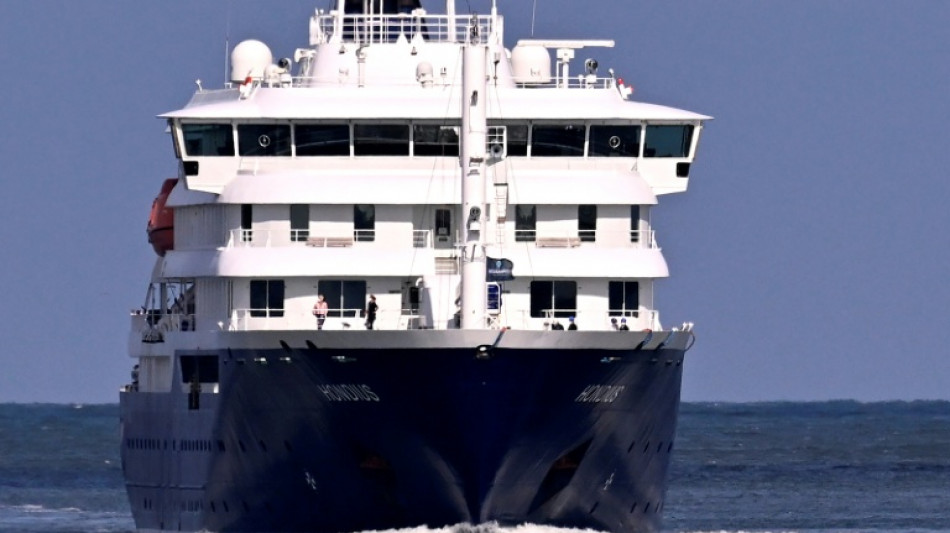
Hantavirus-hit cruise ship docks in Rotterdam at voyage end / Photo: © AFP

 London
 15 °C
15 °C

 Manchester
 14 °C
14 °C
 Glasgow
 10 °C
10 °C
 Dublin
16 °C
Dublin
16 °C
 Belfast
18 °C
Belfast
18 °C
 Washington
19 °C
Washington
19 °C
 Denver
 21 °C
21 °C
 Atlanta
24 °C
Atlanta
24 °C
 Dallas
31 °C
Dallas
31 °C
 Houston Texas
29 °C
Houston Texas
29 °C
 New Orleans
 25 °C
25 °C
 El Paso
31 °C
El Paso
31 °C
 Phoenix
36 °C
Phoenix
36 °C
 Los Angeles
 22 °C
San Diego
22 °C
San Diego
 22 °C
San Francisco
15 °C
Chicago
17 °C
Minneapolis
14 °C
Seattle
22 °C
San Francisco
15 °C
Chicago
17 °C
Minneapolis
14 °C
Seattle
 19 °C
Portland
21 °C
Salt Lake City
22 °C
Las Vegas
30 °C
Miami
26 °C
Jacksonville
25 °C
San Antonio
31 °C
Bermuda
28 °C
Nassau
18 °C
Iqaluit
0 °C
Yellowknife
15 °C
Anchorage
11 °C
Fairbanks
7 °C
Barrow
1 °C
Calgary
19 °C
Edmonton
25 °C
Winnipeg
13 °C
Goose Bay
11 °C
Halifax
11 °C
Boston
13 °C
Ottawa
10 °C
Toronto
13 °C
Detroit
14 °C
Cleveland
15 °C
New York
20 °C
Baltimore
19 °C
Philadelphia
19 °C
Nuuk (Godthåb)
3 °C
Hong Kong
30 °C
Singapore
19 °C
Portland
21 °C
Salt Lake City
22 °C
Las Vegas
30 °C
Miami
26 °C
Jacksonville
25 °C
San Antonio
31 °C
Bermuda
28 °C
Nassau
18 °C
Iqaluit
0 °C
Yellowknife
15 °C
Anchorage
11 °C
Fairbanks
7 °C
Barrow
1 °C
Calgary
19 °C
Edmonton
25 °C
Winnipeg
13 °C
Goose Bay
11 °C
Halifax
11 °C
Boston
13 °C
Ottawa
10 °C
Toronto
13 °C
Detroit
14 °C
Cleveland
15 °C
New York
20 °C
Baltimore
19 °C
Philadelphia
19 °C
Nuuk (Godthåb)
3 °C
Hong Kong
30 °C
Singapore
 29 °C
Melbourne
27 °C
Canberra
12 °C
Adelaide
17 °C
Darwin
30 °C
Perth
18 °C
Fort Worth
28 °C
Honolulu
30 °C
Sydney
16 °C
Johannesburg
13 °C
Dubai
31 °C
Mumbai
27 °C
Zürich
10 °C
Tokyo
30 °C
Seoul
26 °C
Delhi
25 °C
Beijing
23 °C
Riyadh
28 °C
Prague
11 °C
Pennsylvania
16 °C
Valletta
24 °C
Manama
32 °C
Warsaw
9 °C
Stockholm
10 °C
29 °C
Melbourne
27 °C
Canberra
12 °C
Adelaide
17 °C
Darwin
30 °C
Perth
18 °C
Fort Worth
28 °C
Honolulu
30 °C
Sydney
16 °C
Johannesburg
13 °C
Dubai
31 °C
Mumbai
27 °C
Zürich
10 °C
Tokyo
30 °C
Seoul
26 °C
Delhi
25 °C
Beijing
23 °C
Riyadh
28 °C
Prague
11 °C
Pennsylvania
16 °C
Valletta
24 °C
Manama
32 °C
Warsaw
9 °C
Stockholm
10 °C
A cruise ship that sparked global alarm after a deadly outbreak of hantavirus docked in Rotterdam harbour Monday, with the skeleton crew facing weeks of quarantine.
Twenty-five crew and two medical staff remain on board, some of whom could be seen wearing blue hard hats and white face masks as the ship made its final approach into port for disembarkation and disinfection.
The ship, operated by Dutch company Oceanwide Expeditions, made headlines after three passengers died from hantavirus -- a rare virus for which no vaccines nor specific treatments exist.
The World Health Organization has scrambled to reassure the world that the outbreak was not a repeat of the Covid pandemic, stressing that contagion was very rare.
However, the virus has an incubation period of several weeks, meaning more cases from the ship's occupants could emerge in the future, Tedros warned.
Hantavirus has been confirmed in seven patients, with one other probable case, according to an AFP tally from official sources.
The most recent positive test came from Canada in a patient who was on the Hondius, officials said late Sunday.
- Hospitalisations -
After arriving in the Canary Islands on May 10, more than 120 passengers and crew were evacuated from the ship, either to their home countries or to the Netherlands, which has a special responsibility as the ship is Dutch-flagged.
A 65-year-old French woman became symptomatic on the repatriation flight and ended up in critical condition in a Paris hospital with a confirmed case of hantavirus.
Two people, one Dutch and one British, were also urgently evacuated from the ship to the Netherlands and rushed to hospital.
Both are in stable condition and the Briton is well enough to return home for self-isolation, according to Dutch officials.
All others evacuated to the Netherlands from the ship have tested negative for the virus. Some are in quarantine in the Netherlands, others have already flown home.
Everyone still on board is asymptomatic, according to Oceanwide Expeditions, and being closely monitored by two medics on board.
Late Sunday, the WHO said it was maintaining its assessment of the hantavirus outbreak as "low risk".
"While additional cases may still occur among passengers and crew members exposed before containment measures were implemented, the risk of onward transmission is expected to be reduced following disembarkation and the implementation of control measures," it said.
- Andes strain -
The people disembarking on Monday comprise 17 from the Philippines, four from the Netherlands (two crew and the two medical staff), four from Ukraine, one from Russia and one from Poland.
Some of them will stay in quarantine facilities at the port, while others will self-isolate at home.
Also on board is the body of a German woman who died during the voyage.
After docking, the ship will undergo thorough cleaning and disinfection procedures, according to the operator.
The MV Hondius's voyage began on April 1 in Ushuaia, Argentina, taking in remote islands in the South Atlantic Ocean before steaming north to Cape Verde.
The trip was supposed to finish there, but the ship eventually sailed to Tenerife in the Canary Islands for the evacuations by plane.
The MV Hondius presented diplomatic challenges as different countries negotiated over who would receive it and treat its passengers.
Cape Verde refused to take the ship, which remained anchored offshore of the capital Praia as three people were evacuated to Europe by air.
Spain allowed the vessel to anchor off its Canary Islands for the evacuation of passengers and crew but the Atlantic archipelago's regional government fiercely opposed the measure.
Hantavirus spreads from the urine, faeces and saliva of infected rodents and is endemic in Argentina, where the voyage began.
Those infected have the Andes virus -- the only strain of hantavirus that can spread between people.
Kiki Hirschfeldt, a spokeswoman for the operator, said it was too early to say what impact the outbreak could have on the appetite for cruises.
"I mean, for as far as we know right now, the virus was brought on board and that can happen in a hotel, in an airplane, in a boat," she told AFP.
L. Pchartschoy--BTZ