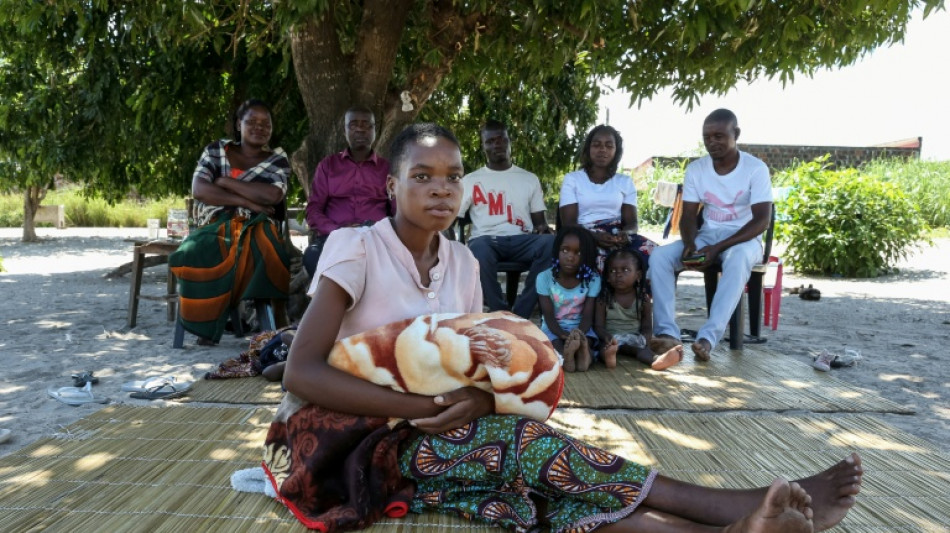
'I wanted to die': survivors recount Mozambique flood terror
/ Photo: © AFP

 London
 16 °C
16 °C

 Manchester
 13 °C
13 °C
 Glasgow
12 °C
Glasgow
12 °C
 Dublin
 17 °C
17 °C
 Belfast
16 °C
Belfast
16 °C
 Washington
18 °C
Washington
18 °C
 Denver
 15 °C
15 °C
 Atlanta
22 °C
Atlanta
22 °C
 Dallas
 26 °C
26 °C
 Houston Texas
26 °C
Houston Texas
26 °C
 New Orleans
24 °C
New Orleans
24 °C
 El Paso
26 °C
El Paso
26 °C
 Phoenix
29 °C
Phoenix
29 °C
 Los Angeles
18 °C
San Diego
21 °C
San Francisco
14 °C
Chicago
14 °C
Minneapolis
11 °C
Seattle
14 °C
Portland
16 °C
Salt Lake City
18 °C
Las Vegas
22 °C
Miami
Los Angeles
18 °C
San Diego
21 °C
San Francisco
14 °C
Chicago
14 °C
Minneapolis
11 °C
Seattle
14 °C
Portland
16 °C
Salt Lake City
18 °C
Las Vegas
22 °C
Miami
 26 °C
Jacksonville
24 °C
San Antonio
26 °C
Bermuda
28 °C
Nassau
16 °C
Iqaluit
0 °C
Yellowknife
10 °C
Anchorage
9 °C
Fairbanks
4 °C
Barrow
26 °C
Jacksonville
24 °C
San Antonio
26 °C
Bermuda
28 °C
Nassau
16 °C
Iqaluit
0 °C
Yellowknife
10 °C
Anchorage
9 °C
Fairbanks
4 °C
Barrow
 1 °C
Calgary
14 °C
Edmonton
19 °C
Winnipeg
8 °C
Goose Bay
8 °C
Halifax
13 °C
Boston
13 °C
Ottawa
1 °C
Calgary
14 °C
Edmonton
19 °C
Winnipeg
8 °C
Goose Bay
8 °C
Halifax
13 °C
Boston
13 °C
Ottawa
 8 °C
Toronto
10 °C
Detroit
11 °C
Cleveland
14 °C
New York
15 °C
Baltimore
16 °C
Philadelphia
16 °C
Nuuk (Godthåb)
1 °C
Hong Kong
30 °C
Singapore
8 °C
Toronto
10 °C
Detroit
11 °C
Cleveland
14 °C
New York
15 °C
Baltimore
16 °C
Philadelphia
16 °C
Nuuk (Godthåb)
1 °C
Hong Kong
30 °C
Singapore
 27 °C
Melbourne
25 °C
Canberra
11 °C
Adelaide
17 °C
Darwin
31 °C
Perth
20 °C
Fort Worth
25 °C
Honolulu
26 °C
Sydney
14 °C
Johannesburg
19 °C
Dubai
38 °C
Mumbai
31 °C
Zürich
12 °C
Tokyo
29 °C
Seoul
30 °C
Delhi
35 °C
Beijing
30 °C
Riyadh
38 °C
Prague
12 °C
Pennsylvania
15 °C
Valletta
27 °C
Manama
35 °C
Warsaw
12 °C
Stockholm
12 °C
27 °C
Melbourne
25 °C
Canberra
11 °C
Adelaide
17 °C
Darwin
31 °C
Perth
20 °C
Fort Worth
25 °C
Honolulu
26 °C
Sydney
14 °C
Johannesburg
19 °C
Dubai
38 °C
Mumbai
31 °C
Zürich
12 °C
Tokyo
29 °C
Seoul
30 °C
Delhi
35 °C
Beijing
30 °C
Riyadh
38 °C
Prague
12 °C
Pennsylvania
15 °C
Valletta
27 °C
Manama
35 °C
Warsaw
12 °C
Stockholm
12 °C
Erica Raimundo Mimbir delivered her first baby on a school desk, the only dry place she found after days marooned in her flooded home in southern Mozambique.
"I wanted to die because of the labour pains and the conditions," the 17-year-old told AFP in a village in the province of Maputo.
Evacuated by boat the next day, Mimbir took shelter with relatives, among some 650,000 Mozambicans the United Nations says have been affected by torrential rains since December.
"I don't think I'll return home because I've never experienced anything like this," Mimbir said, recounting that the high waters meant she could not sleep lying down but leaning against a wall.
"It was very painful," she said, holding her baby, Rosita, who was born on January 19 premature and weighing 1.5 kilogrammes (3.3 pounds).
The child was named after Rosita Salvador, whose mother gave birth in a tree that she climbed to escape devastating flooding in Mozambique in 2000.
Salvador, who died this month after a long illness, became a symbol of resilience in a disaster that killed 800 people.
The southern African country's latest bout of flooding has claimed nearly 140 lives since October 1, according to the National Disasters Management Institute.
Around 100,000 people are sheltering in one of 99 temporary accommodation centres, says the UN's humanitarian coordination office (OCHA).
- 'Heart not at peace' -
In the province's 3 de Fevereiro village in Manhica district, a low-slung school has been turned into one such emergency shelter.
About 500 people sleep on mats in its 11 classrooms, their clothes draped over blackboards and window bars as they take stock of what the floods swept away and how close many came to losing their lives.
Among them is Elsa Paulino, a 36-year-old mother of five who became cut off from her home after taking her two youngest children to a funeral outside her village.
By the time she returned, the road had vanished under rising water. "The car I was travelling in almost overturned because of the fury of the waters," she told AFP.
Her other three children were still at home. "I was desperate."
Paulino eventually managed to arrange for them to be evacuated by bus to relatives in neighbouring Gaza province, also badly affected by the floods.
But washed-out roads mean her children have still not been able to join her. "Right now I know my children are safe but my mother's heart isn't at peace," she said.
Across the region, floods have ripped through critical infrastructure -- roads, bridges, power lines and water systems. They have slowed aid deliveries and isolated entire communities.
The N1 highway linking Maputo to the north remains cut. About 325,000 head of livestock have died and 285,000 hectares (704,250 acres) of farmland have been damaged, according to OCHA.
The latest flooding is among the worst Mozambique has seen in years, with officials warning the death toll could rise as more heavy rains loom and a nationwide red‑alert remains in force.
For Salvador Maengane, a 67‑year‑old farmer sheltering in 3 de Fevereiro, the losses are total.
"All my farmland was flooded," he said. He was due to harvest maize and vegetables in March and sugarcane in May.
"Everything was lost and I have nothing to sell. All my family's livelihood is gone," he said, his thin frame hunched with exhaustion.
Maengane, who farms five hectares in Xinavane, further north, said that in previous rainy seasons he could still salvage part of his crop.
"This is the first time I have seen a tragedy of this magnitude," he said.
P. Rasmussen--BTZ