BMW 7 Series and i7: facelift in 2026

 London
 26 °C
26 °C

 Manchester
 19 °C
19 °C
 Glasgow
22 °C
Glasgow
22 °C
 Dublin
16 °C
Dublin
16 °C
 Belfast
16 °C
Belfast
16 °C
 Washington
 19 °C
19 °C
 Denver
14 °C
Denver
14 °C
 Atlanta
 17 °C
17 °C
 Dallas
24 °C
Dallas
24 °C
 Houston Texas
26 °C
Houston Texas
26 °C
 New Orleans
26 °C
New Orleans
26 °C
 El Paso
 19 °C
19 °C
 Phoenix
20 °C
Phoenix
20 °C
 Los Angeles
 19 °C
San Diego
17 °C
San Francisco
19 °C
San Diego
17 °C
San Francisco
 13 °C
Chicago
15 °C
Minneapolis
17 °C
Seattle
13 °C
Chicago
15 °C
Minneapolis
17 °C
Seattle
 15 °C
Portland
14 °C
Salt Lake City
13 °C
Las Vegas
19 °C
Miami
26 °C
Jacksonville
22 °C
San Antonio
25 °C
Bermuda
27 °C
Nassau
17 °C
Iqaluit
15 °C
Portland
14 °C
Salt Lake City
13 °C
Las Vegas
19 °C
Miami
26 °C
Jacksonville
22 °C
San Antonio
25 °C
Bermuda
27 °C
Nassau
17 °C
Iqaluit
 2 °C
Yellowknife
3 °C
Anchorage
7 °C
Fairbanks
3 °C
Barrow
-3 °C
Calgary
8 °C
Edmonton
13 °C
Winnipeg
15 °C
Goose Bay
12 °C
Halifax
14 °C
Boston
15 °C
Ottawa
12 °C
Toronto
18 °C
Detroit
16 °C
Cleveland
16 °C
New York
18 °C
Baltimore
19 °C
Philadelphia
19 °C
Nuuk (Godthåb)
3 °C
Hong Kong
2 °C
Yellowknife
3 °C
Anchorage
7 °C
Fairbanks
3 °C
Barrow
-3 °C
Calgary
8 °C
Edmonton
13 °C
Winnipeg
15 °C
Goose Bay
12 °C
Halifax
14 °C
Boston
15 °C
Ottawa
12 °C
Toronto
18 °C
Detroit
16 °C
Cleveland
16 °C
New York
18 °C
Baltimore
19 °C
Philadelphia
19 °C
Nuuk (Godthåb)
3 °C
Hong Kong
 30 °C
Singapore
29 °C
Melbourne
24 °C
Canberra
7 °C
Adelaide
22 °C
Darwin
28 °C
Perth
16 °C
Fort Worth
25 °C
Honolulu
24 °C
Sydney
14 °C
Johannesburg
12 °C
Dubai
35 °C
Mumbai
30 °C
Zürich
27 °C
Tokyo
18 °C
Seoul
17 °C
Delhi
29 °C
Beijing
18 °C
Riyadh
40 °C
Prague
24 °C
Pennsylvania
19 °C
Valletta
26 °C
Manama
35 °C
Warsaw
21 °C
Stockholm
17 °C
30 °C
Singapore
29 °C
Melbourne
24 °C
Canberra
7 °C
Adelaide
22 °C
Darwin
28 °C
Perth
16 °C
Fort Worth
25 °C
Honolulu
24 °C
Sydney
14 °C
Johannesburg
12 °C
Dubai
35 °C
Mumbai
30 °C
Zürich
27 °C
Tokyo
18 °C
Seoul
17 °C
Delhi
29 °C
Beijing
18 °C
Riyadh
40 °C
Prague
24 °C
Pennsylvania
19 °C
Valletta
26 °C
Manama
35 °C
Warsaw
21 °C
Stockholm
17 °C
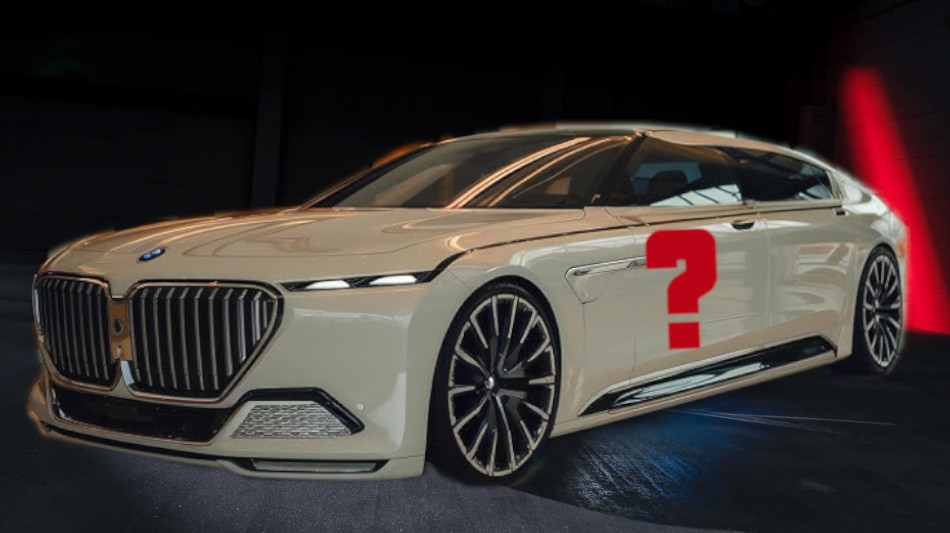
The seventh generation of the BMW 7 Series will be presented in a comprehensively revised form from 2026. We have created a graphic preview in the form of a photo, but whether this corresponds to reality is still questionable, to say the least. Around four years after the series made its debut, the Munich-based manufacturer's flagship model will undergo a so-called life cycle impulse, which offers much more than just cosmetic changes. The first prototypes, which were spotted on test drives around the Nürburgring, reveal that BMW is becoming bolder in its design: the striking double kidney grille remains divided into two parts, but appears lower and less bulky thanks to horizontal bars. In addition, the narrow daytime running lights have been redesigned into more delicate daytime running light clips. The rear end will feature a clearer, horizontal light signature based on the design of the 5 Series. Four trapezoidal tailpipes reveal that powerful combustion engines will continue to be used, while an extended body variant is unnecessary as the current G70 model already comes with a long wheelbase as standard.
In the interior, BMW is focusing on a technological revolution. The new Panoramic iDrive – a further development of the classic head-up display – projects driving-related information across the entire width of the windscreen, largely replacing the conventional instrument cluster. The driver operates the system via a central touch display with Quick Select logic and a new multifunction unit on the steering wheel, whose buttons provide haptic feedback. Together with the optional 3D projection in the driver's field of vision, the system enables intuitive, distraction-free operation. Another highlight is the integration of innovations from the ‘New Class’, which BMW will gradually roll out in all model series from 2025 onwards. These include more connected on-board electronics and more powerful computers, which are a prerequisite for new Level 3 assistance systems. Additional sensors in the front apron indicate the use of the Personal Pilot system, which is designed to enable temporary autonomous driving in defined situations.
BMW is remaining true to its broad drive portfolio and expanding it with efficiency improvements. The proven 740d xDrive inline six-cylinder diesel engine continues to deliver around 299 hp, but is supported by a 48-volt mild hybrid system designed to reduce fuel consumption and emissions. In the 750e xDrive and M760e xDrive plug-in hybrids, the electric range increases from the current 80 kilometres to around 100 kilometres thanks to a larger battery, enabling the driver to make longer journeys in pure electric mode. The system output increases to 489 hp and 571 hp respectively, with the interaction between the six-cylinder engine and the electric motor being more harmoniously tuned. In addition, BMW plans to offer a particularly exclusive version with the Alpina variant, which offers additional performance potential.
The i7 continues to be the electric flagship. In addition to the familiar eDrive50 (455 hp), xDrive60 (544 hp) and M70 xDrive (659 hp) variants, new battery technologies from the sixth generation of the eDrive system could be introduced with the facelift. These use cylindrical battery cells and an 800-volt architecture, enabling higher charging capacities and increased range. The i7 xDrive60 already achieves more than 600 km according to WLTP, while the top-of-the-range M70 model achieves around 560 km. The new batteries are expected to significantly exceed these figures, while DC fast charging can recharge over 100 km of range in ten minutes. This represents a very important step towards everyday electric mobility, especially as BMW continues to offer its customers comprehensive charging packages.
The extensively modernised interior and the further developed drive systems are inevitably reflected in the price. The current model generation starts at €118,400 for the saloon with a combustion engine, while the i7 starts at €115,900. The facelift is expected to start at over €120,000. In return, buyers will not only get an exterior with a more contemporary design language, but above all a luxury saloon that is one of the most advanced vehicles on the market in terms of digitalisation and autonomy. Production is scheduled to start at the end of 2025, with the market launch planned for summer 2026. BMW is thus confidently positioning the 7 Series against its competitors from Stuttgart and Ingolstadt and is using the time to prepare for its complete replacement by the generation based on the ‘New Class’.
Overall, the facelift of the BMW 7 Series and the i7 marks an important step on the way to a fully digital and lower-emission future for the brand. BMW is, and this is likely to be seen in Stuttgart as well, the target brand in all classes when it comes to style and technology.
With a sharpened design language, highly innovative operating logic, powerful drives and new semi-autonomous driving functions, the manufacturer is demonstrating how luxury and modernity can interact in the luxury segment. The coming years will show how customers react to the mix of tradition and technological progress – but one thing is certain: the 7 Series will continue to expand its role as BMW's technological flagship.